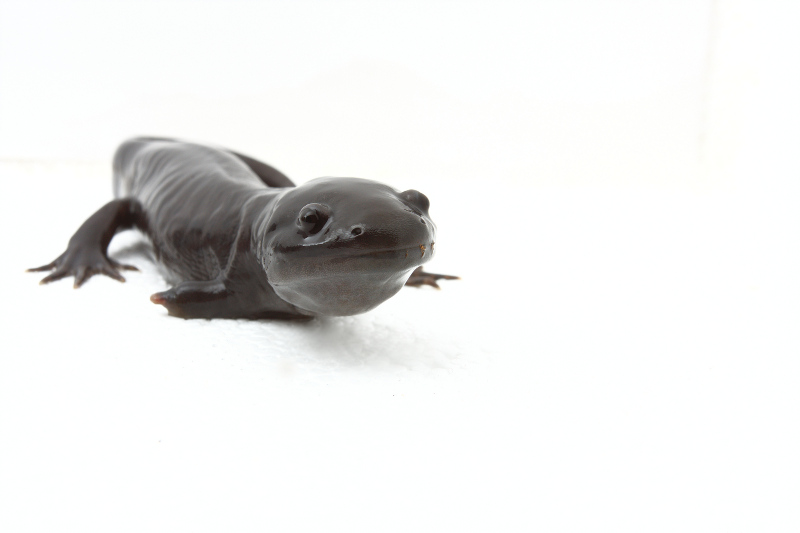
Scientists induced metamorphosis in axolotls (salamanders that normally remain aquatic their whole lives) to test whether the transformation affects their legendary ability to regenerate lost limbs. They found that metamorphosis reduces regeneration speed by half and causes limb defects. Researchers used axolotls, which can be artificially induced to undergo metamorphosis as adults using thyroxine hormone. They compared limb regeneration between age-matched axolotls that remained aquatic (paedomorphic) versus those that underwent metamorphosis, controlling for body size and age. Metamorphosis caused a twofold reduction in regeneration rate. Body size had no effect on regeneration rate in adult axolotls. Metamorphic axolotls developed carpal and digit malformations during regeneration. Metamorphic blastemal cells showed lower proliferative rates and took longer to traverse the cell cycle. The research helps explain why most animals lose their ability to regenerate body parts as they develop, potentially showing key mechanisms that could be targeted to promote regeneration in other animals, including humans. Understanding what restricts regeneration could inform regenerative medicine approaches.
Citation
Monaghan, James R.; Stier, Adrian C.; Michonneau, François; Smith, Matthew D.; Pasch, Bret; Maden, Malcolm; Seifert, Ashley W. (2014). Experimentally induced metamorphosis in axolotls reduces regenerative rate and fidelity. Regeneration.
This paper is Open Access.
Cite this article
Monaghan et al. (2014). Axolotl Regeneration Declines After Metamorphosis. Ocean Recoveries Lab. https://doi.org/10.1002/reg2.8