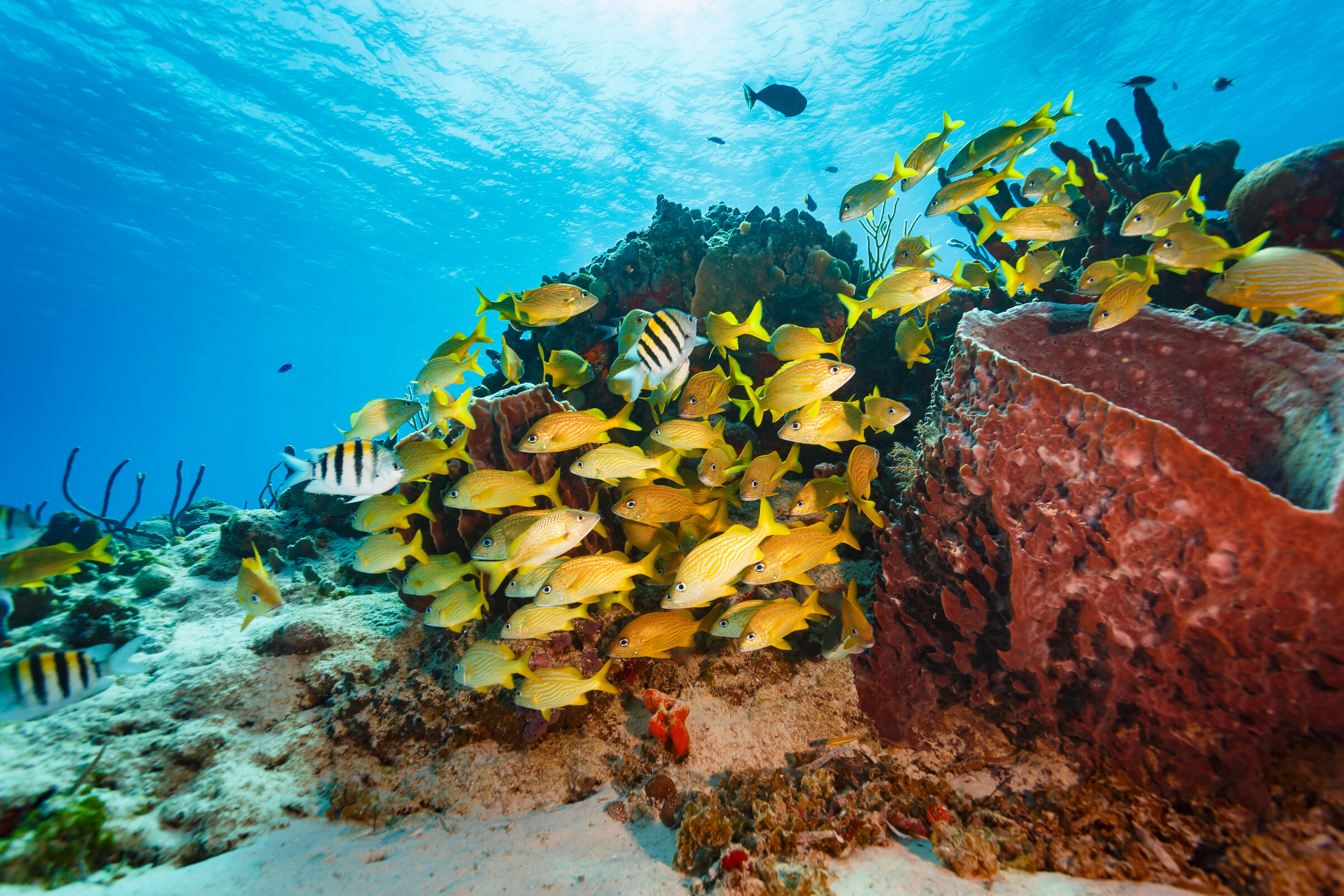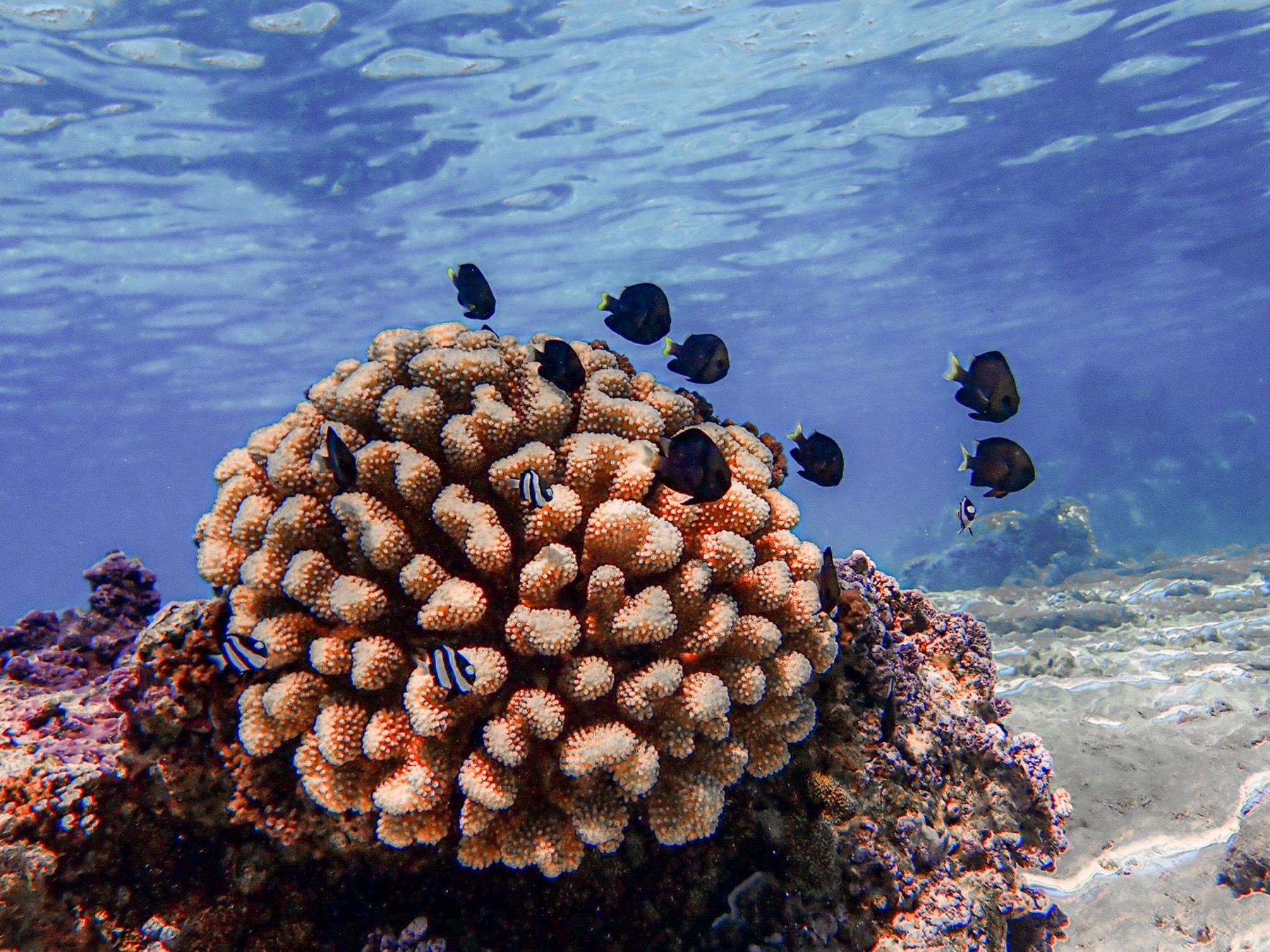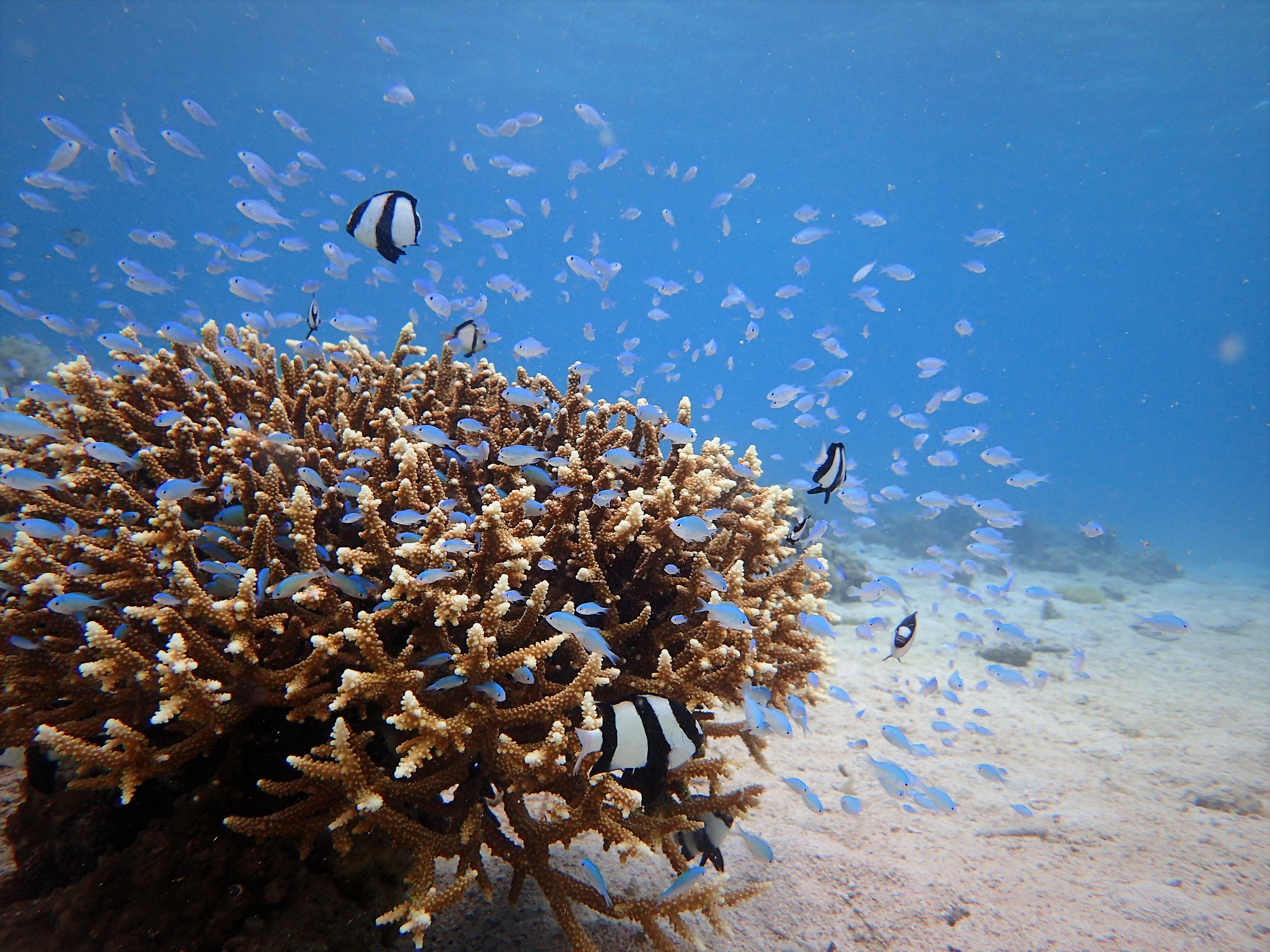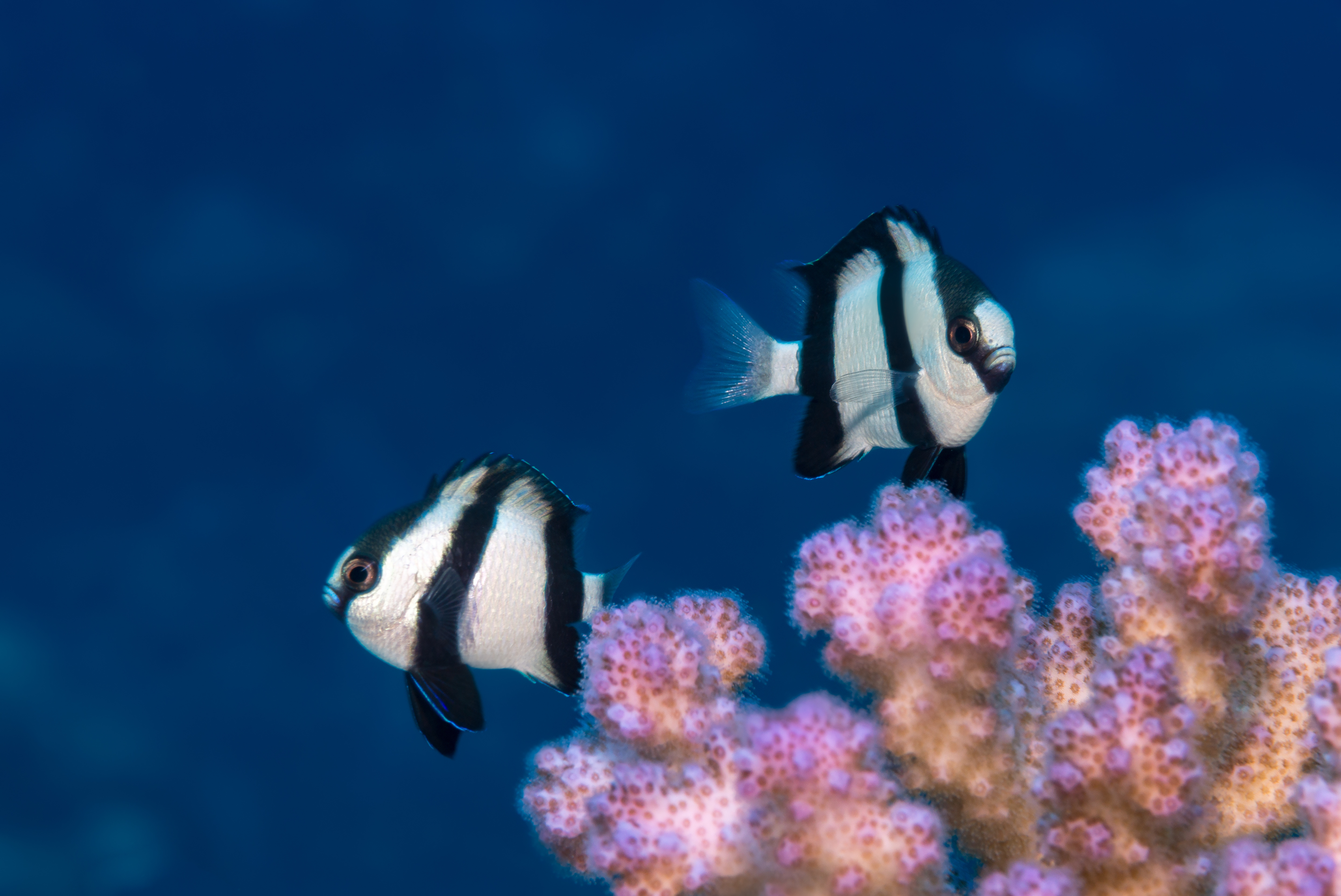
Researchers used computer modeling to explore how fish living in coral colonies affect their host corals' ability to survive bleaching events. They found that while fish waste can promote coral growth, it can also make corals more vulnerable to bleaching under certain conditions. Researchers modified an existing dynamic energy budget computer model of coral-algae symbiosis to include nitrogen excretion by coral-dwelling fish. They simulated different environmental conditions and stress scenarios to predict how fish presence would affect coral growth and bleaching responses. Fish-derived nitrogen can promote coral growth under normal conditions. Fish excretions support denser symbiont populations that provide protection through self-shading. However, these denser symbionts use more photosynthetic products for their own growth rather than sharing with the coral host. This puts corals at higher risk of becoming carbon-limited and bleaching, with effects depending on environmental conditions. As coral reefs face increasing threats from marine heatwaves and bleaching events, understanding how coral-dwelling fish influence bleaching susceptibility could inform conservation strategies. The research shows that relationships between corals and their fish inhabitants are more complex than previously thought, with potential benefits and risks depending on environmental conditions.
Citation
Detmer, A. Raine; Cunning, Ross; Pfab, Ferdinand; Brown, Alexandra L.; Stier, Adrian C.; Nisbet, Roger M.; Moeller, Holly V. (2022). Fertilization by coral-dwelling fish promotes coral growth but can exacerbate bleaching response. Journal of Theoretical Biology.
This paper is Open Access.
Cite this article
Detmer et al. (2022). Coral-Dwelling Fish Can Promote Growth but Increase Bleaching Risk. Ocean Recoveries Lab. https://doi.org/10.1016/j.jtbi.2022.111087