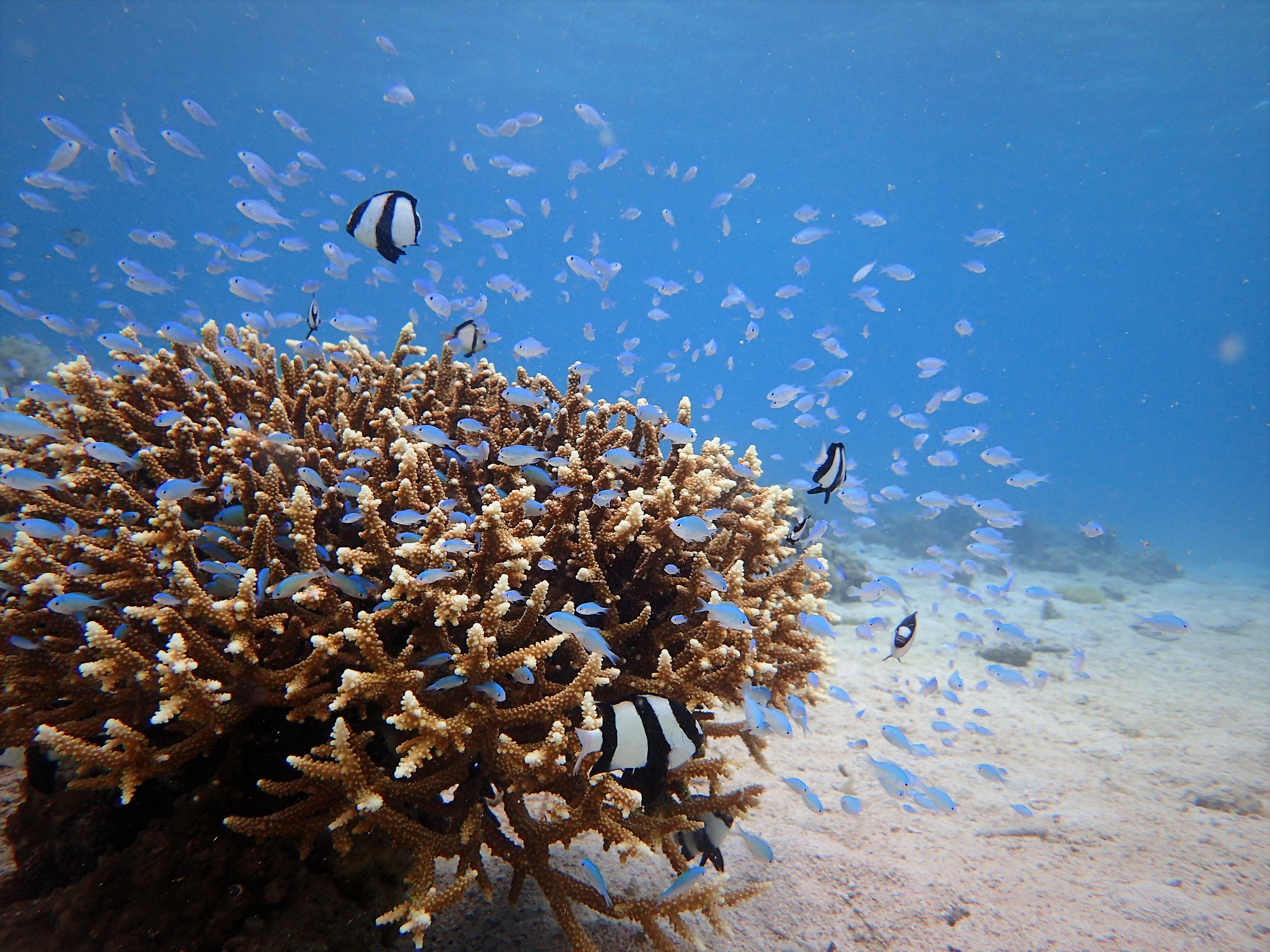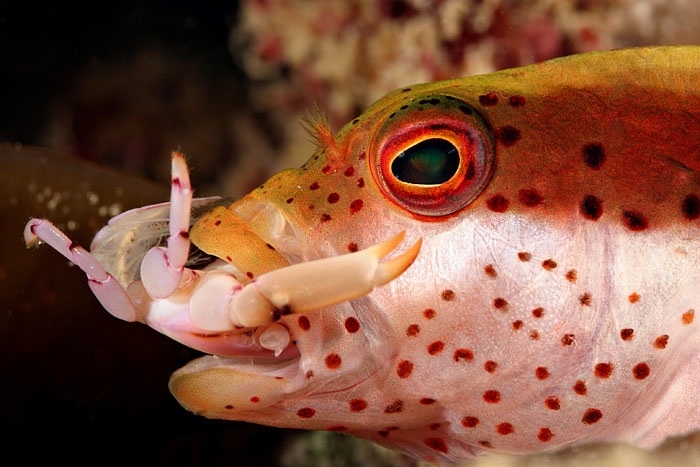
Researchers used mathematical models to show that predators can sometimes help coral reefs by eating the wrong fish, specifically by consuming competitively dominant fish species that provide poor benefits to corals, allowing higher-quality mutualist fish to thrive instead. The researchers created a mathematical model inspired by coral reef ecosystems in French Polynesia, focusing on two fish species (hawkfish and damselfish) that live in corals and help them grow by providing nutrients through their waste. They modeled how predation affects the competition between these fish species and the resulting benefits to corals. Predators can have indirect positive effects on coral hosts when they preferentially consume competitively dominant fish that provide lower quality services to corals. In the French Polynesia system they studied, hawkfish are dominant competitors but damselfish cause corals to grow significantly faster. When predation reverses the outcome of competition between mutualist fish, it can enhance overall coral performance. The direction and strength of predator effects depend on asymmetries in mutualist competition, service provision, and predation vulnerability. The research shows that removing predators from coral reefs (through fishing or other disturbances) could have unexpected negative consequences by allowing lower-quality fish mutualists to dominate, potentially reducing coral growth and reef health in an era of widespread coral decline.
Citation
Moeller, Holly V.; Nisbet, Roger M.; Stier, Adrian C. (2023). Cascading benefits of mutualists' predators on foundation species: A model inspired by coral reef ecosystems. Ecosphere.
This paper is Open Access.
Cite this article
Moeller et al. (2023). Predators Can Help Corals by Shifting Which Fish Dominate. Ocean Recoveries Lab. https://doi.org/10.1002/ecs2.4382