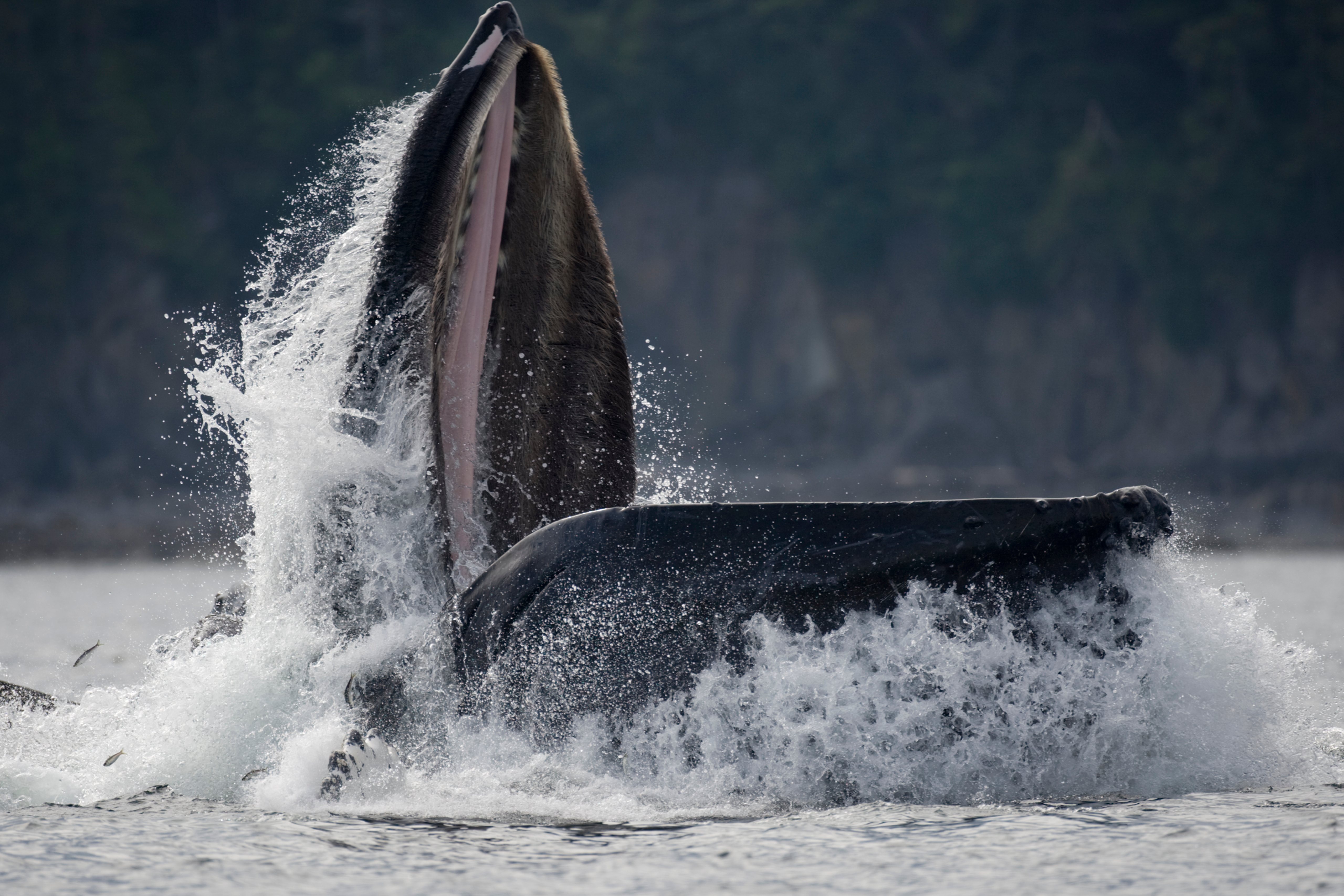
We studied Pacific herring, which are central to the coastal food webs of the Pacific Northwest. They feed whales, seabirds, salmon, and humans. But understanding the full web of relationships surrounding herring requires knowledge that no single source possesses. Research led by Adrian Stier, working with Jameal Samhouri, Steven Gray, Rebecca Martone, Megan Mach, Benjamin Halpern, Carrie Kappel, Courtney Scarborough, and Phillip Levin, explored how different forms of expertise can be combined for better conservation.
We focused on Haida Gwaii, British Columbia, where Pacific herring have sustained Indigenous communities for millennia and where scientific research has documented herring ecology for decades. They surveyed experts representing three knowledge types: scientific researchers, traditional ecological knowledge holders from Indigenous communities, and local fishers and resource users.
Rather than finding conflicting worldviews, We discovered complementary expertise. Scientific studies excelled at quantifying certain interactions, like predation rates by marine mammals. Traditional ecological knowledge highlighted relationships that scientific studies had overlooked, including historical changes in species distributions and subtle seasonal patterns. Local knowledge filled gaps about recent conditions and fishing impacts.
The synthesis revealed a richer picture of the herring food web than any single knowledge source provided. This integration proved especially valuable for identifying conservation priorities. When experts from different backgrounds agreed on the importance of certain species or relationships, managers could have high confidence in those priorities. Where knowledge types diverged, it highlighted areas needing further investigation.
The approach isn't without challenges. Different knowledge systems use different evidence standards, time scales, and ways of describing ecological relationships. We developed methods to translate across these frameworks while respecting the integrity of each knowledge type.
As marine ecosystems face unprecedented change from climate warming and shifting species distributions, the ecological knowledge accumulated over generations by Indigenous communities and local resource users becomes increasingly valuable. Our research demonstrates practical methods for honoring and integrating that knowledge into conservation planning.
Citation
Stier, Adrian C.; Samhouri, Jameal F.; Gray, Steven; Martone, Rebecca G.; Mach, Megan E.; Halpern, Benjamin S.; Kappel, Carrie V.; Scarborough, Courtney; Levin, Phillip S. (2017). Integrating Expert Perceptions into Food Web Conservation and Management. Conservation Letters.
This paper is Open Access.
Cite this article
Stier et al. (2017). Different Ways of Knowing the Ocean: How Traditional and Scientific Knowledge Together Improve Conservation. Ocean Recoveries Lab. https://doi.org/10.1111/conl.12245