We investigated how coral-dwelling fish affect their hosts during bleaching events investigating how coral-dwelling fish affect their hosts during bleaching events discovered something more complicated than expected. We, led by A. Raine Detmer and including Ross Cunning, Ferdinand Pfab, Alexandra Brown, Adrian Stier, Roger Nisbet, and Holly Moeller, found that the relationship between coral-dwelling fish and their hosts is a double-edged sword that could either help or harm corals depending on the circumstances.
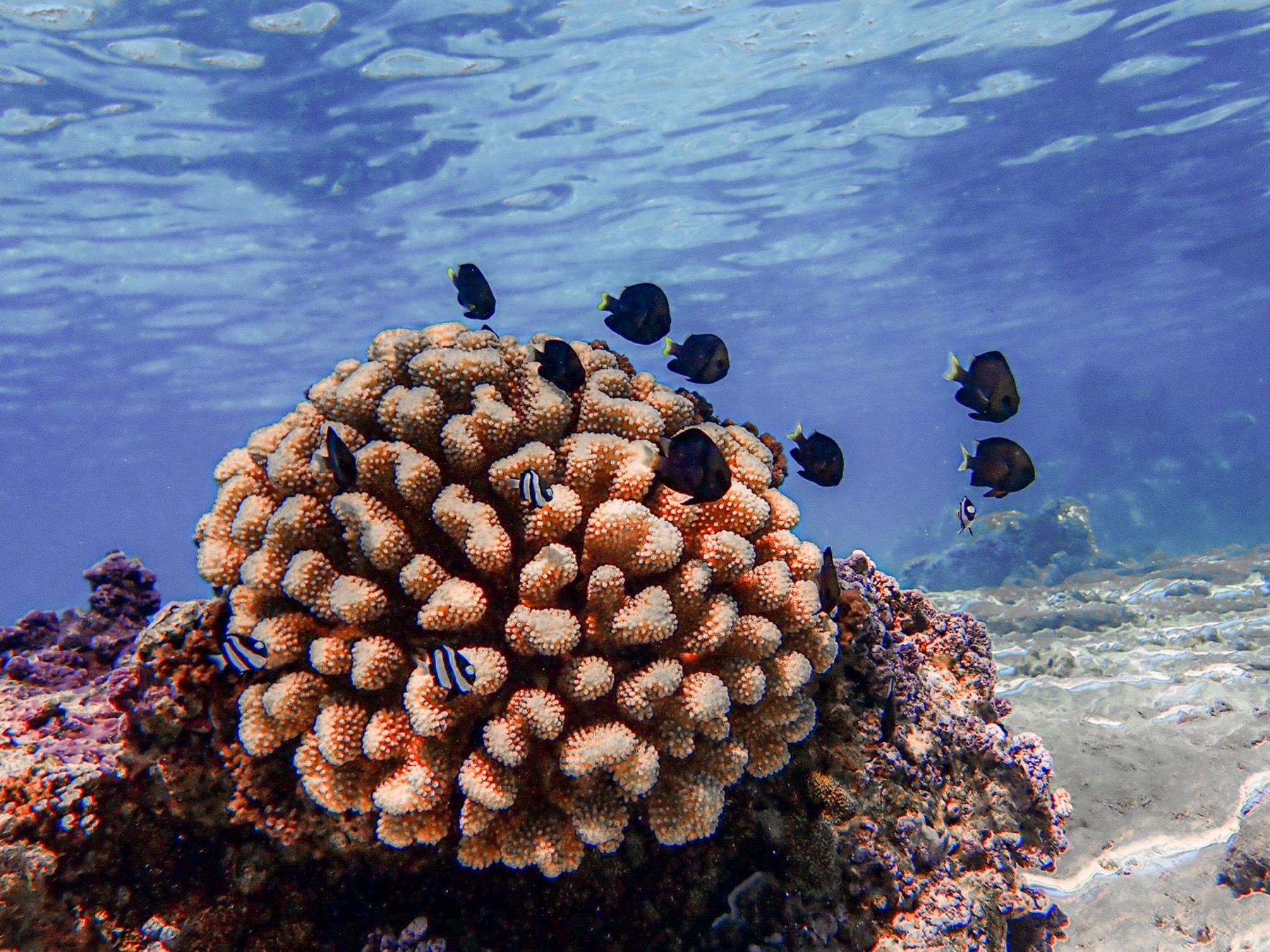
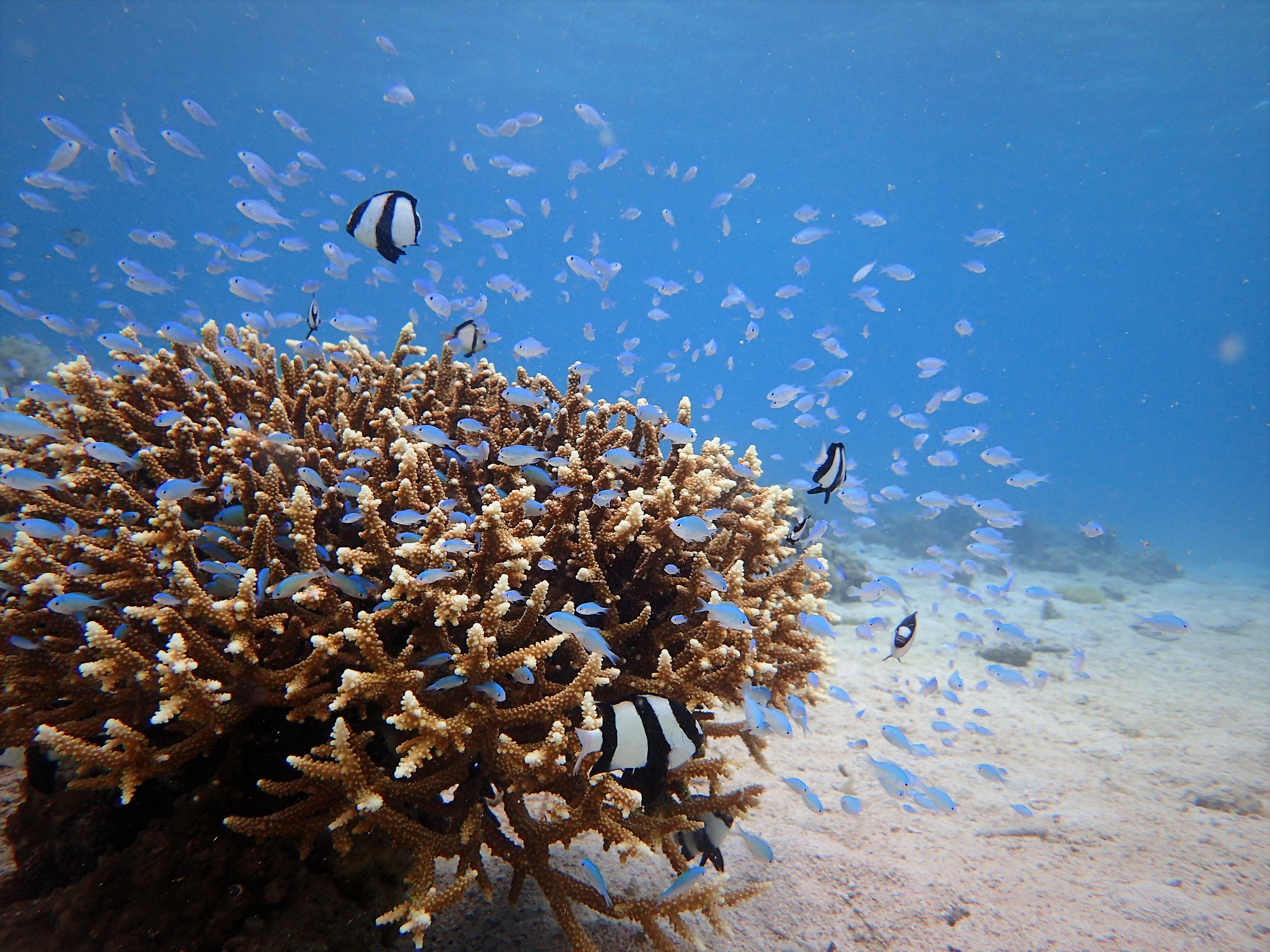
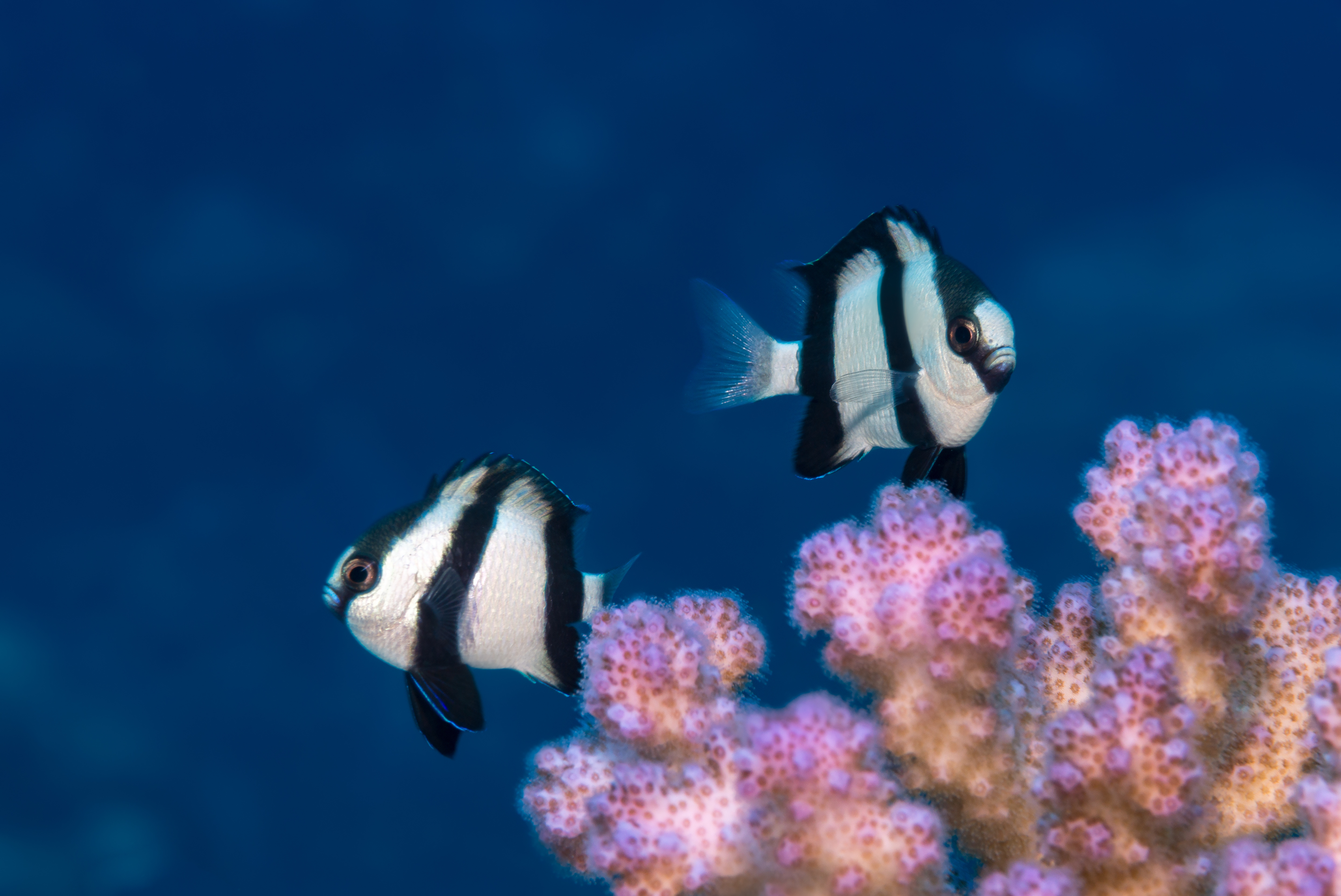
We wanted to understand how the nitrogen that fish excrete affects whether corals bleach during heat stress. Many branching corals host families of damselfish and other small fish that rarely leave their coral homes. These fish produce waste that contains nitrogen, and previous work had shown that this fertilization can boost coral growth under normal conditions. But what happens during a bleaching event? We modified an existing dynamic energy budget model that tracks how energy and nutrients flow through the coral-algae partnership, adding equations to account for fish excretions and their effects on the nitrogen available to corals.
The model predicted that fish-derived nitrogen does promote coral growth, just as earlier studies had shown. But We also found that this fertilization creates denser populations of the algae living inside corals. These algae provide some protection by shading the coral from harmful light, which should help prevent bleaching. However, the model revealed a troubling trade-off: these denser algal populations used more of their photosynthetic products for their own growth rather than sharing with the coral host, putting the coral at higher risk of becoming carbon-limited and bleaching. The balance between the benefits of increased shading and the costs of reduced carbon sharing depended on environmental conditions.
"These findings matter because coral reefs are facing unprecedented threats from marine heatwaves and bleaching events."
The effects were non-linear, meaning the relationship between fish presence and coral tolerance wasn't straightforward – sometimes fish helped, sometimes they hurt, and sometimes the effects were barely detectable. We also noted that their model focused on nitrogen effects and might be missing other important mechanisms by which fish could benefit corals, such as improving water flow or removing sediments.
These findings matter because coral reefs are facing unprecedented threats from marine heatwaves and bleaching events. If fish can sometimes make their coral hosts more vulnerable rather than more resilient, this could change how we think about coral conservation. It also suggests that the diverse communities of creatures living on reefs interact in ways that are far more complex than previously understood. The potentially harmful effects predicted by the model contrast with some empirical studies showing protective effects, highlighting gaps in current understanding.
The work raises important questions for future research. Field experiments are needed to test whether the model's predictions hold up in real coral colonies. Researchers also need to understand how other factors – like water flow, sediment removal, and protection from predators – might tip the balance toward fish being helpful rather than harmful. Each new discovery reveals how much remains to be understood about these intricate underwater partnerships.
Citation
Detmer, A. Raine; Cunning, Ross; Pfab, Ferdinand; Brown, Alexandra L.; Stier, Adrian C.; Nisbet, Roger M.; Moeller, Holly V. (2022). Fertilization by coral-dwelling fish promotes coral growth but can exacerbate bleaching response. Journal of Theoretical Biology.
This paper is Open Access.
Cite this article
Detmer et al. (2022). Fish Roommates May Actually Make Corals More Vulnerable to Bleaching. Ocean Recoveries Lab. https://doi.org/10.1016/j.jtbi.2022.111087