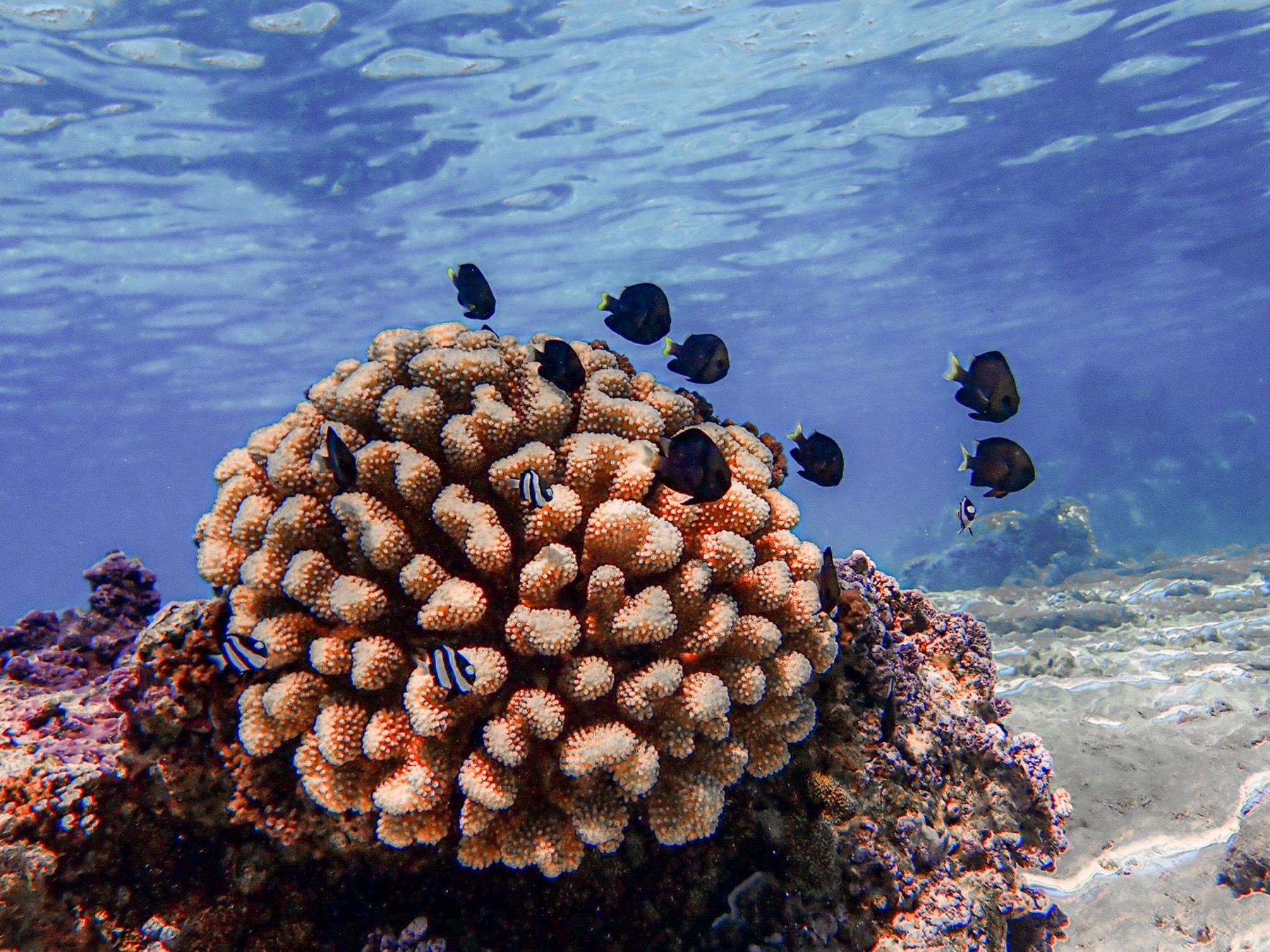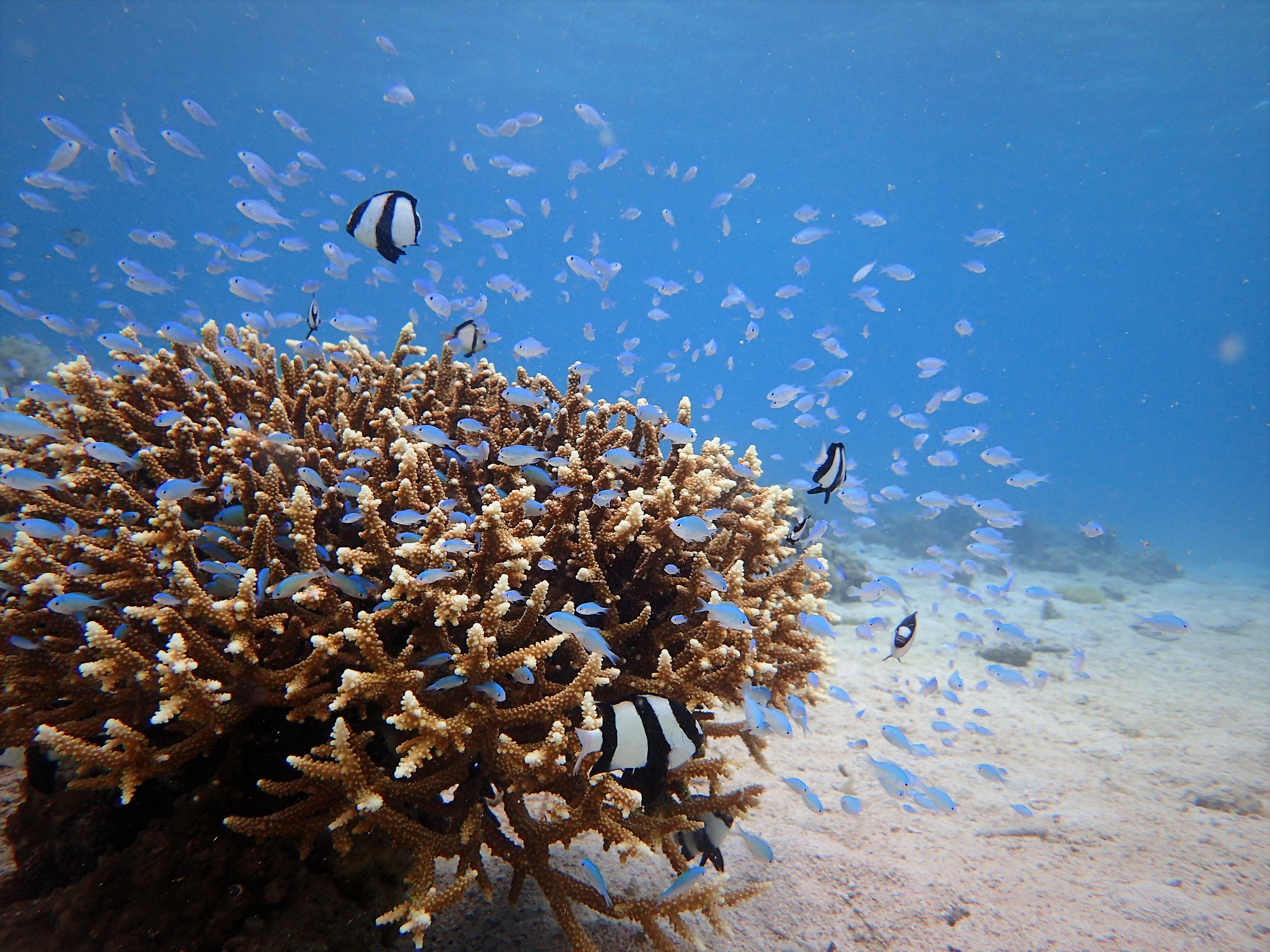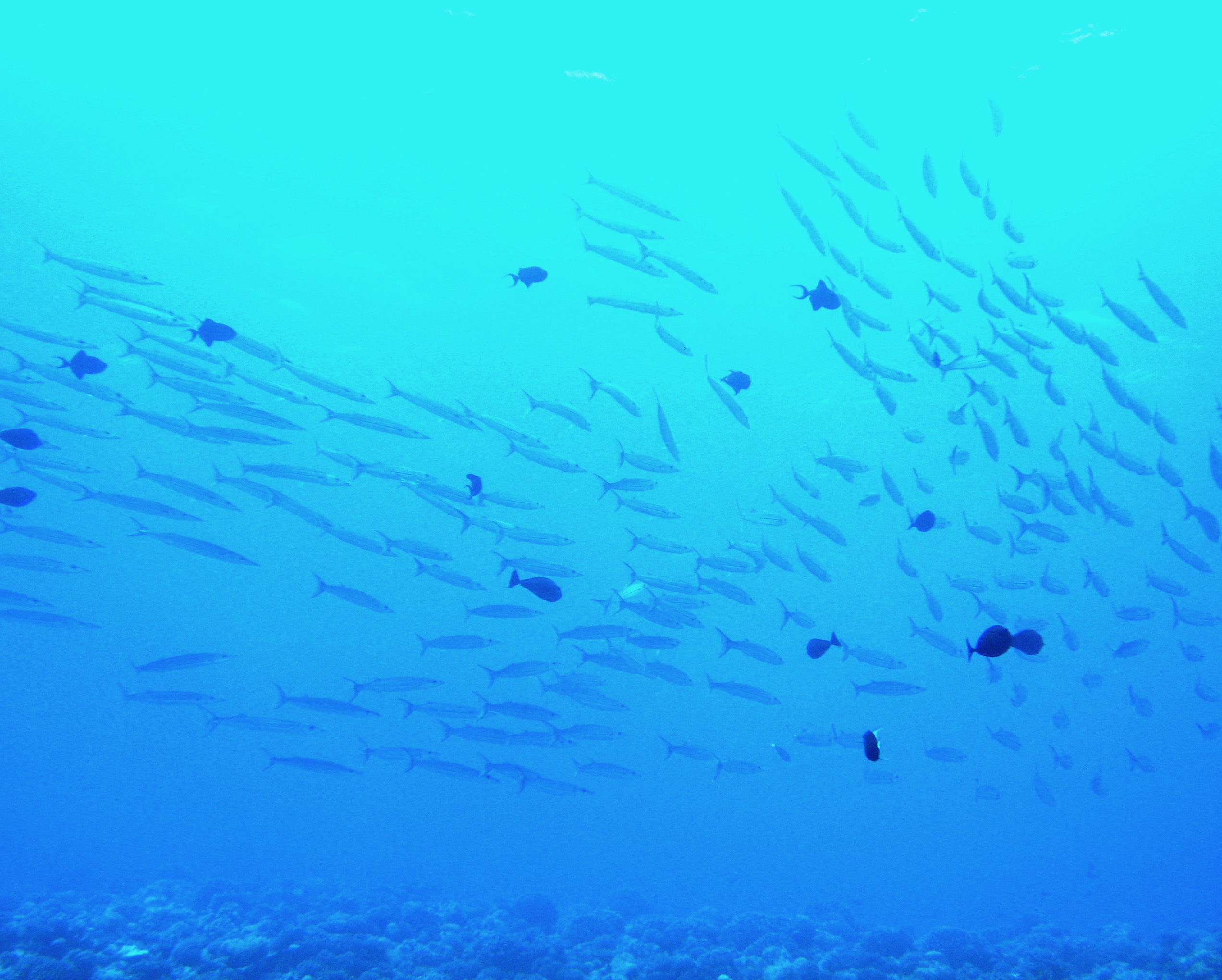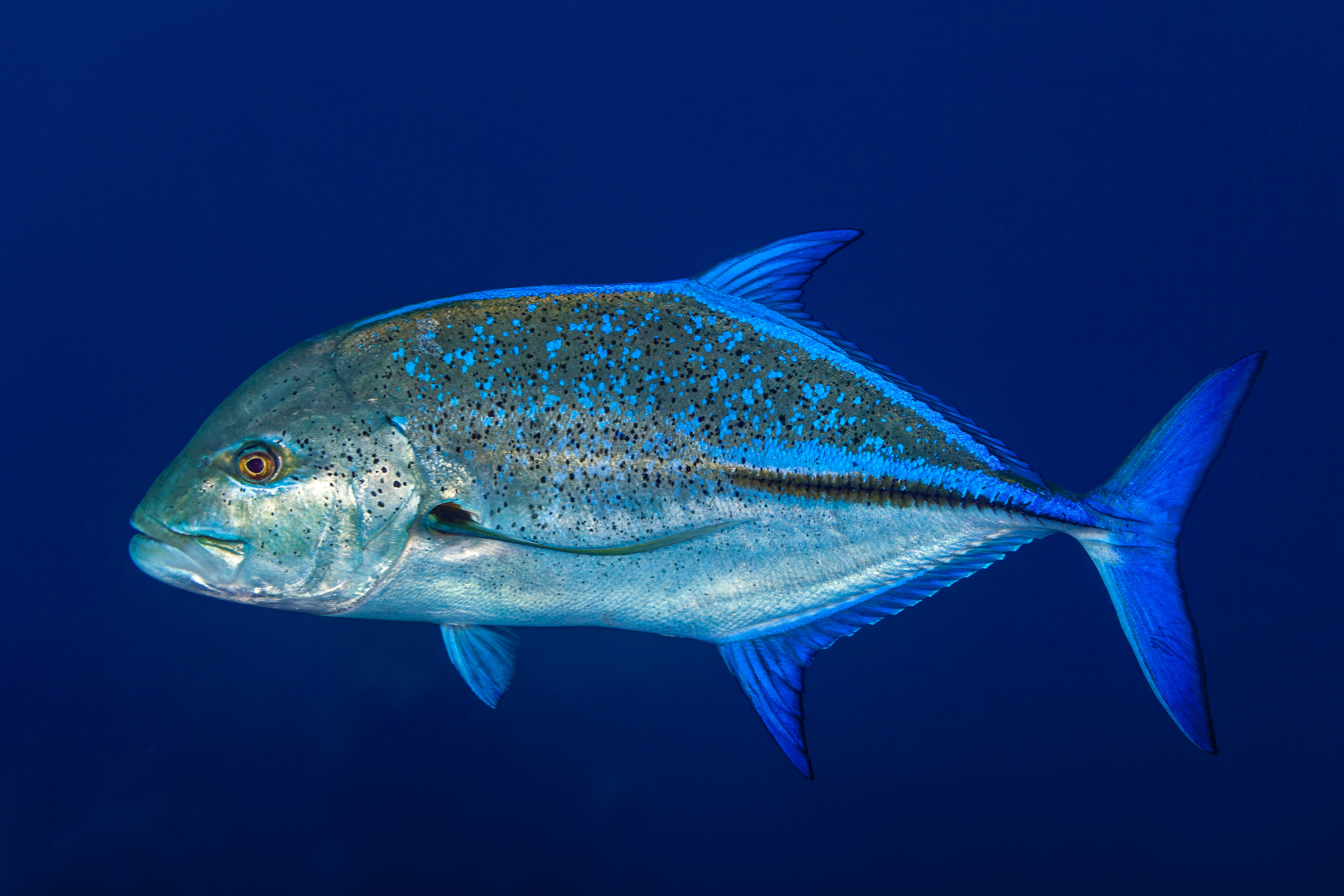
We examined how predators affect young coral-dwelling fish during their critical first weeks on the reef.
After 54 days of monitoring during the 2008 austral summer, Our results showed dramatic predator effects. A total of 172 young fish from 20 species and nine families were observed across all treatments. Predators reduced recruit abundance by 74% and species richness by 42% compared to protected reefs. Every fish family experienced losses when predators were present, though the magnitude varied. Acanthuridae, Lethrinidae, and Pomacentridae showed statistically significant reductions, with families like Balistidae, Lethrinidae, and Mullidae experiencing the highest proportional losses (94-100%), while Gobiidae and Labridae had smaller reductions of approximately 30%.
The key finding was that predators operated non-selectively. Rarefaction analysis revealed that reduced species diversity occurred simply because fewer individual fish meant fewer species could persist on each reef, rather than predators targeting specific species. This indiscriminate predation pattern suggests that predators function more like a general mortality factor than as selective sculptors of community structure.
"We examined how predators affect young coral-dwelling fish during their critical first weeks on the reef."
These results indicate that predation can alter diversity of reef fish communities by reducing abundance across species soon after settlement, thereby reducing the number of species present on reefs. The study demonstrates the important role of both resident and transient predators in shaping coral reef fish community structure during the critical early recruitment period.
Citation
Heinlein, J. M.; Stier, A. C.; Steele, M. A. (2010). Predators reduce abundance and species richness of coral reef fish recruits via non-selective predation. Coral Reefs.
Cite this article
Heinlein et al. (2010). Reef Predators Act Like Lawnmowers, Cutting Down Young Fish Indiscriminately. Ocean Recoveries Lab. https://doi.org/10.1007/s00338-010-0592-7