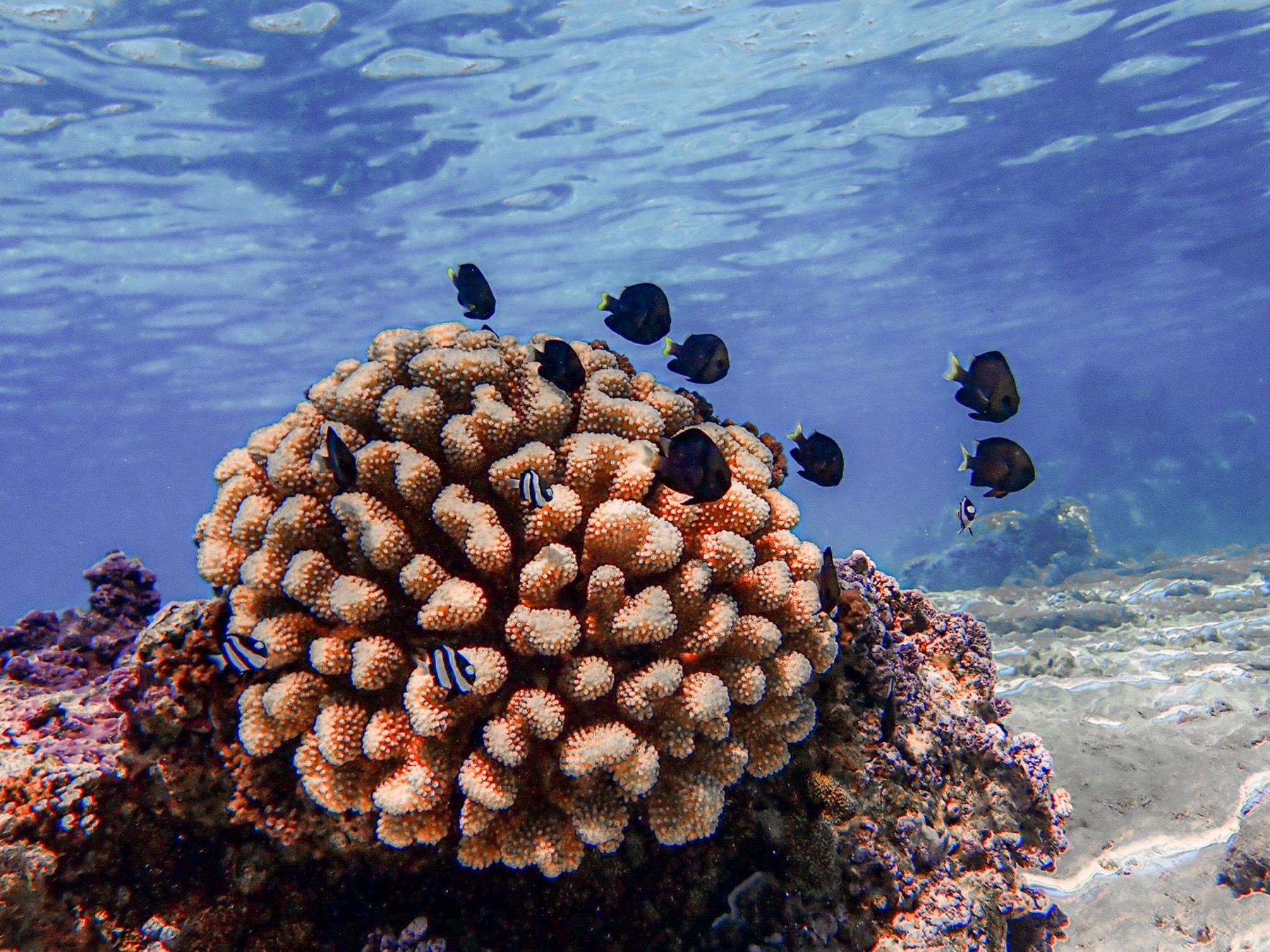
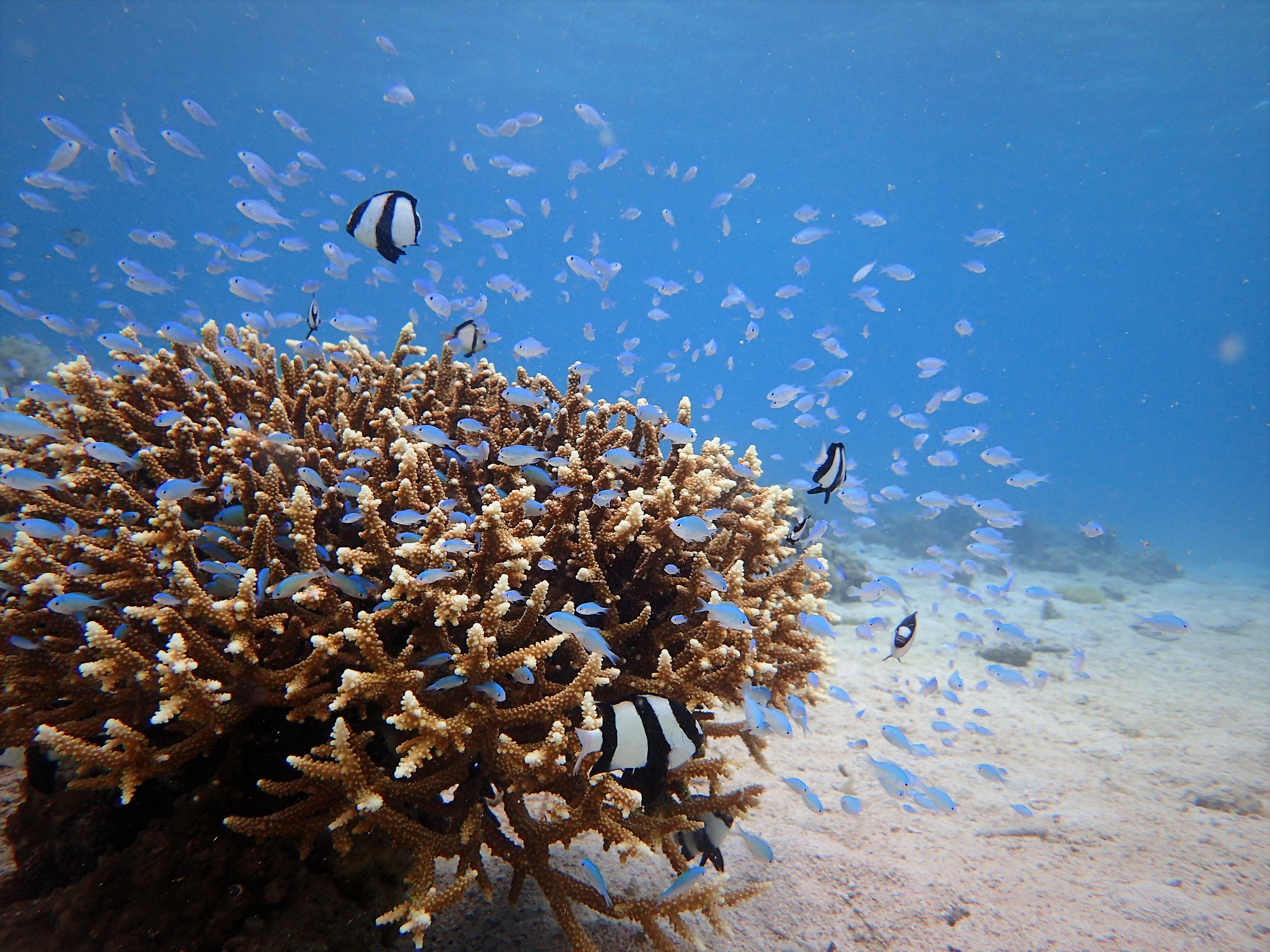
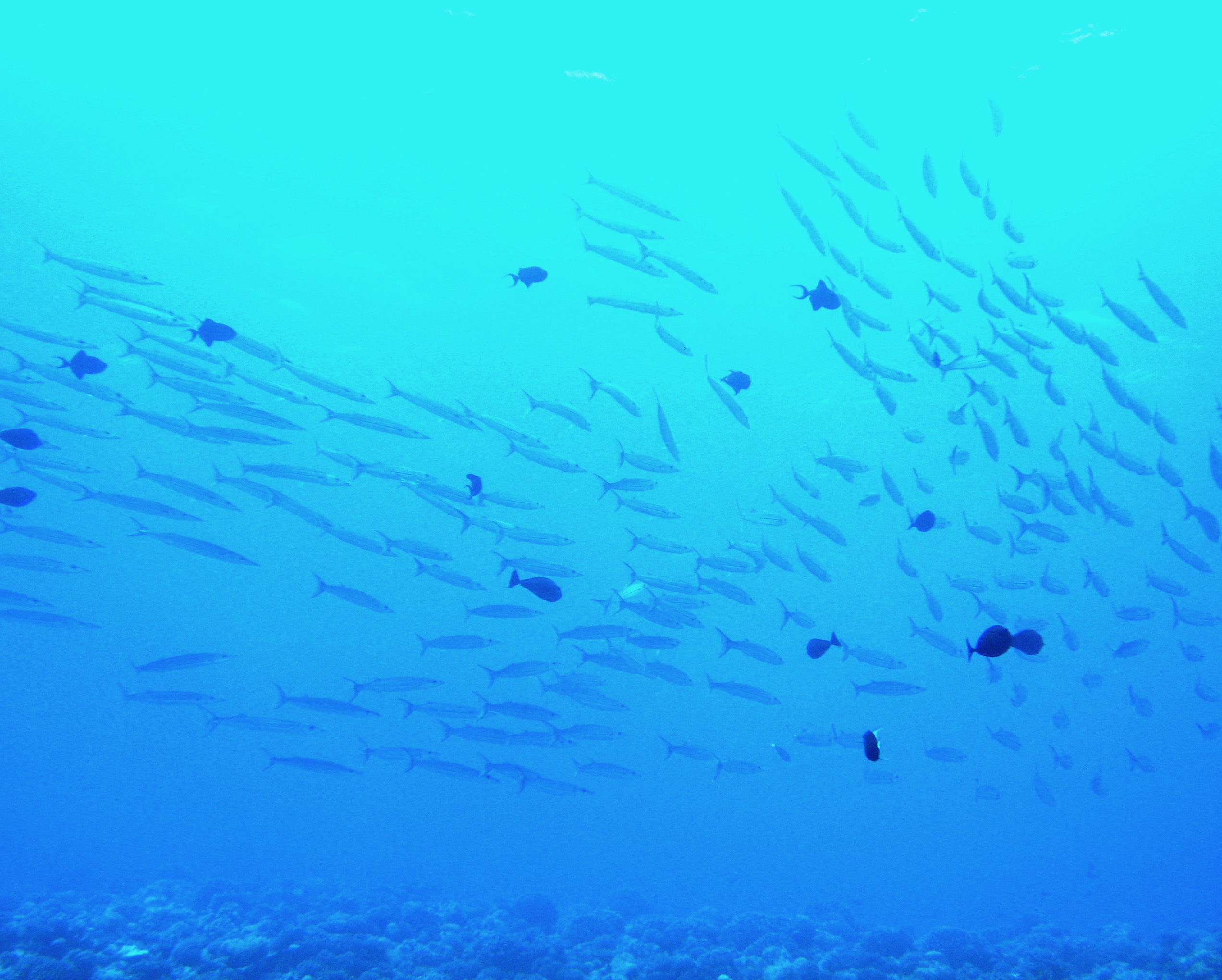
We mapped predator-to-prey ratios across Pacific coral reefs, expecting to see clear patterns. Instead, they found the opposite. The most remote reefs—places like Midway and Tuvalu—had three times as many predator species per prey species as reefs near large landmasses like Palau and Vanuatu.
Researchers wanted to understand how differences in dispersal patterns between predators and prey might shape community structure across ocean scales. They analyzed published species lists from 35 major coral reef communities across the Pacific, cataloging 1,350 total species and classifying each as either a piscivorous top predator or prey based on diet and life history. Then they built a mathematical model that incorporated a key trait of reef fish: the duration their larvae spend drifting in the open ocean before settling on reefs.
The analysis revealed that predator-prey ratios varied among islands by a factor of 3, ranging from 0.34 to 1.1 predator species per prey species. While total reef fish species richness decreased with increasing isolation as expected, predator species richness remained relatively stable across habitats. In contrast, prey species richness declined rapidly with isolation. When we examined larval duration data from 382 Indo-Pacific reef fish species, they discovered that predator larvae spend 28% longer dispersing than prey larvae—38.1 days compared to 28.3 days on average.
The research showed how this difference in larval duration could reverse typical ecosystem patterns. The dispersal model demonstrated that predators' longer time in the plankton allows their larvae to spread farther from their point of release, creating a more uniform distribution across space compared to prey larvae.
These findings challenge fundamental assumptions about how ecosystems collapse under fragmentation. If predators can maintain populations on isolated reefs better than previously thought, it suggests coral reef ecosystems might be more resilient to habitat loss than terrestrial systems. This could reshape approaches to marine conservation, particularly as climate change and human activities increasingly fragment coral reef habitats.
Citation
Stier, Adrian C.; Hein, Andrew M.; Parravicini, Valeriano; Kulbicki, Michel (2014). Larval dispersal drives trophic structure across Pacific coral reefs. Nature Communications.
This paper is Open Access.
Cite this article
Stier et al. (2014). Remote Coral Reefs Defy Ecology Rules With Surprisingly High Predator Populations. Ocean Recoveries Lab. https://doi.org/10.1038/ncomms6575