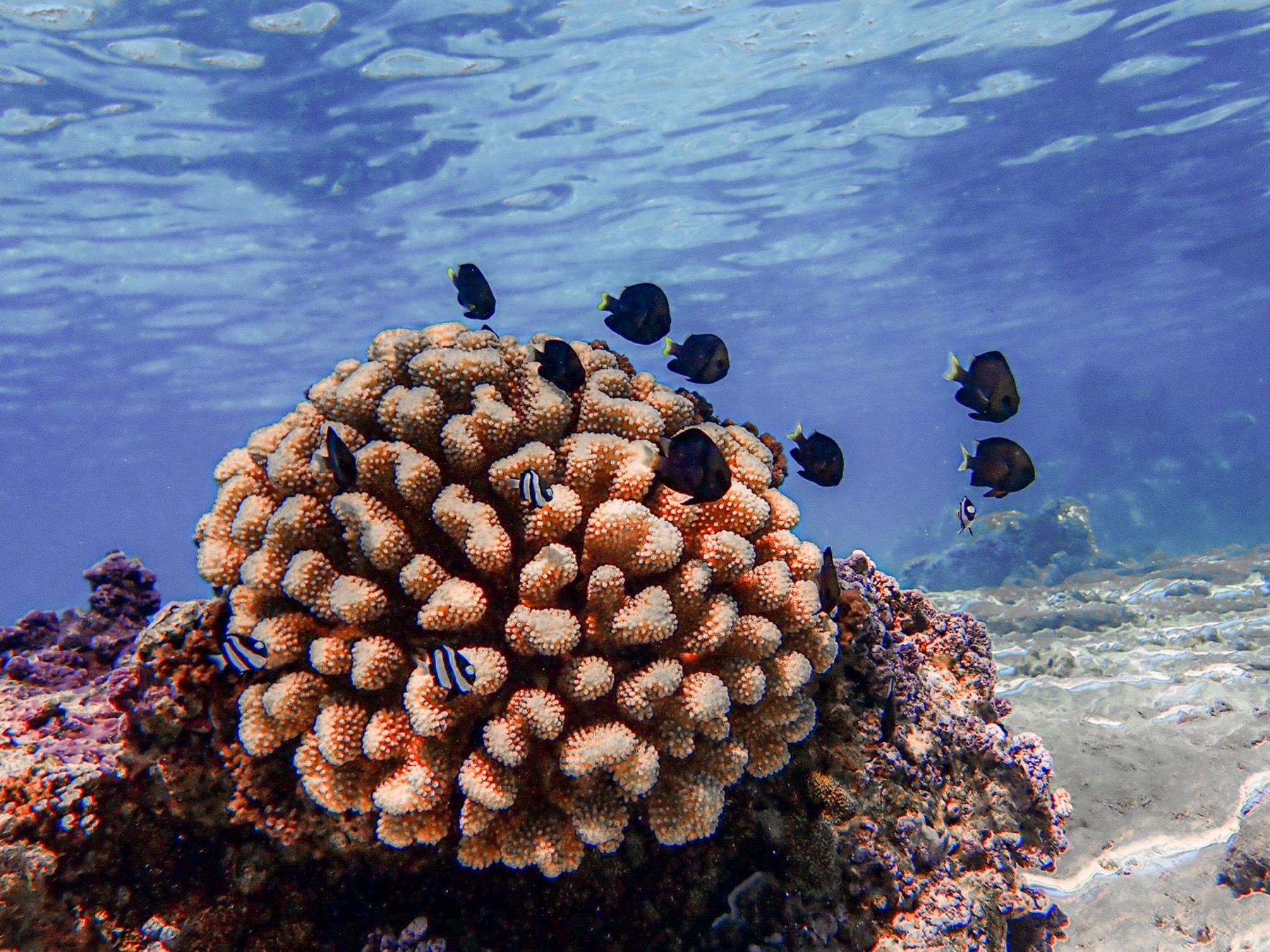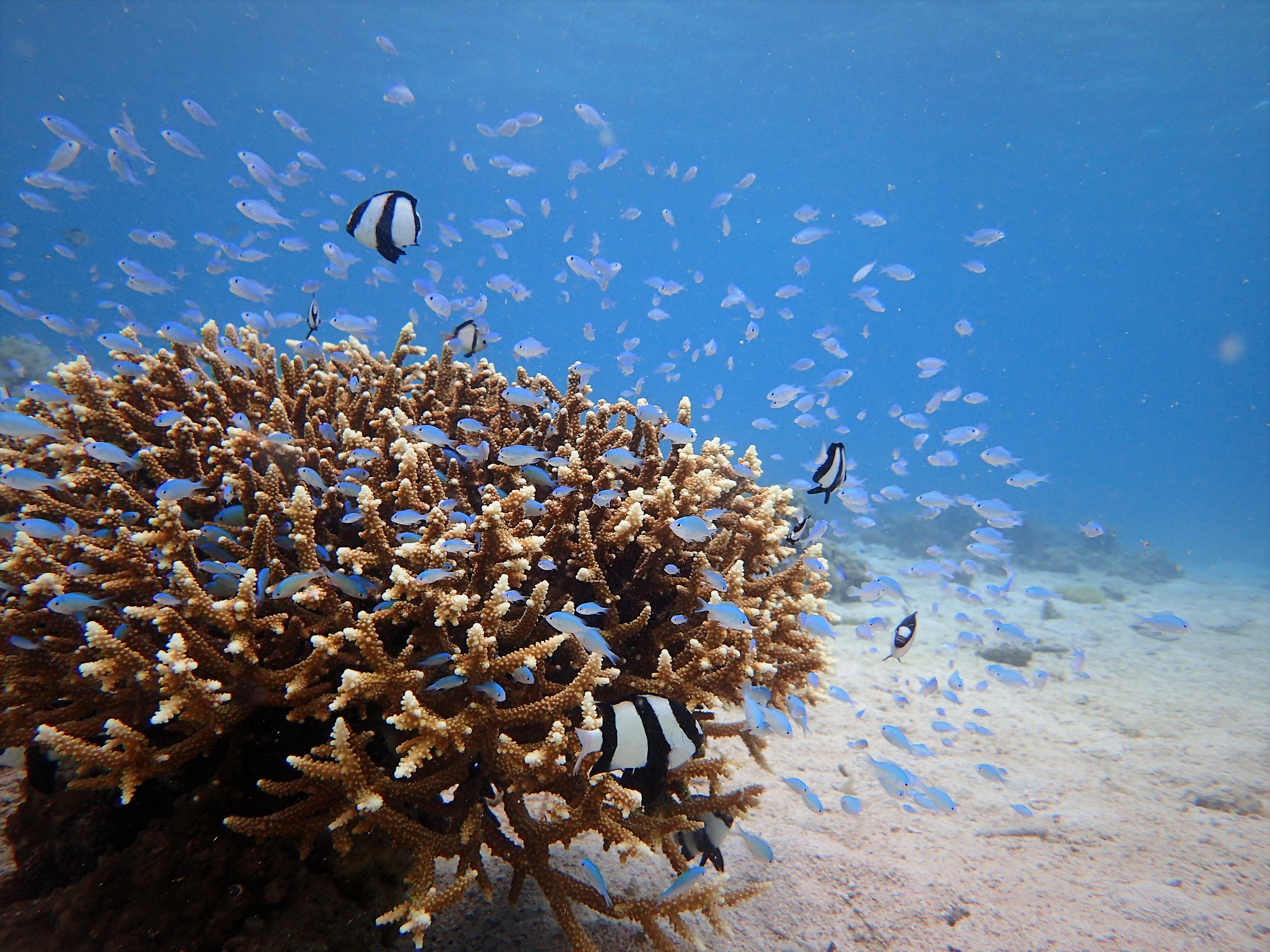
We conducted an experiment in the lagoons of Moorea to test a fundamental question about coral reef recovery: does safety come in numbers? Ecological theory suggested that when coral populations crash, they might fall into a 'predator pit'—a deadly trap where predators focus their attacks on the few remaining corals, preventing recovery. We wanted to know if clustering young corals together might dilute this predation pressure, giving them a better chance to survive and grow. So they created coral neighborhoods of different sizes: solitary corals, groups of four spaced 13 centimeters apart, and dense clusters of eight corals just 6 centimeters from their neighbors.
The results were stark and unambiguous. Corallivorous fish caused high mortality rates in exposed corals after just 30 days, regardless of whether those corals were alone or crowded together. Meanwhile, corals protected behind mesh cages survived without damage. The pattern held over the long term—after one year, protected corals showed dramatic growth while exposed corals declined. There was no interaction between density and predation: fish attacked with equal intensity whether corals were isolated or clustered.
What surprised researchers was finding no evidence for predator dilution at the densities tested, which reflected the natural range of staghorn coral spacing on Moorea's patch reefs. We had expected that dense coral clusters might overwhelm the fish, forcing them to spread their attacks across more targets. Instead, the predators seemed undeterred by coral abundance. Perhaps dilution effects only emerge in the massive staghorn thickets that can stretch for tens of meters—formations that are naturally defended by territorial damselfish that ward off both herbivores and corallivores.
These findings suggest that the conventional wisdom about safety in numbers doesn't apply to young staghorn corals, at least not at the scales studied. For coral restoration efforts, this means that simply planting corals closer together won't protect them from predation. The research highlights how vulnerable juvenile corals are during this critical establishment phase, when they're building the foundation for future thickets but haven't yet grown large enough to attract protective damselfish partners. Understanding this vulnerability is crucial for predicting how coral populations might recover after major bleaching events or other disturbances that reduce coral cover.
The broader implications for different coral species and reef systems remain to be explored. Does this density-independent predation pattern hold for other coral types, or is it unique to fast-growing staghorn species? And what happens in reef areas with different corallivore communities or varying predation pressure? Further experiments across multiple species and locations are needed to understand whether young corals anywhere can truly find safety in numbers, or if protection from predators—through restoration techniques, marine protected areas, or other management strategies—remains their best hope for survival.
Citation
Kopecky, Kai L.; Cook, Dana T.; Schmitt, Russell J.; Stier, Adrian C. (2021). Effects of corallivory and coral colony density on coral growth and survival. Coral Reefs.
This paper is Open Access.
Cite this article
Kopecky et al. (2021). Safety in Numbers Doesn't Work for Baby Corals Under Attack. Ocean Recoveries Lab. https://doi.org/10.1007/s00338-021-02076-z