We examined climate policy discussions around Green New Deal proposals, which have focused primarily on terrestrial solutions. We identified this as a significant missed opportunity given that oceans cover 71% of the planet's surface.
We analyzed four key sectors where ocean and terrestrial climate solutions could be integrated: renewable energy, transportation, food security, and habitat restoration. They propose what they call a 'Teal Deal'—combining green terrestrial and blue ocean strategies into a more comprehensive approach.
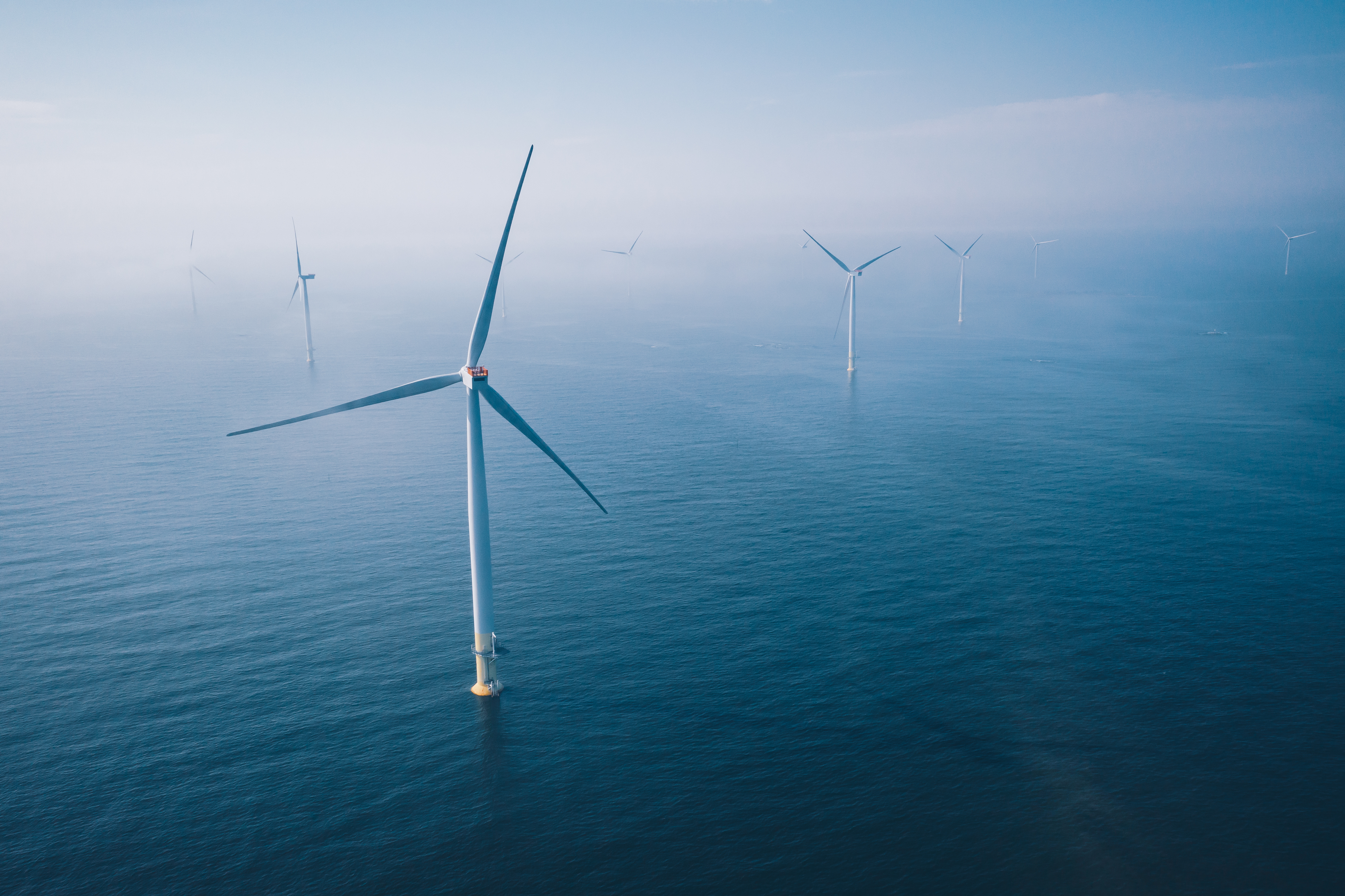
Our analysis revealed significant potential for offshore renewable energy. Offshore winds blow harder and more consistently than on land, with potential to harness more than 100 GW of untapped offshore wind resources in U.S. Federal waters. The timing is particularly compelling: wind strength peaks in the afternoon and evening, precisely when solar energy production declines but electricity demand reaches its highest point. In California, this creates complementarity where offshore wind could fill gaps when solar production drops.
The economic potential is demonstrated by European offshore wind farms, which generated 18.5 GW of clean power in 2018 and supported as many as 130,000 full-time equivalent jobs per year. Deep-water floating wind turbines are capable of powering over 15,000 homes each, representing significant technological advancement.
However, We found that offshore energy development in the U.S. currently intersects nine different domestic policies, creating bureaucratic obstacles that discourage investment and development. This regulatory complexity represents a significant barrier despite ready technology and favorable economics.
We argue that portfolio theory supports diversifying climate solution sets to reduce risk and increase returns on investment. With both expected and unanticipated consequences of climate change, integrated terrestrial-ocean policies could be more nimble and adaptive than single-sector approaches. A Teal Deal approach could achieve climate regulation goals while building resilience, generating economic co-benefits, and supporting ecosystem services that neither purely terrestrial nor purely marine approaches could deliver alone.
Citation
Dundas, Steven J.; Levine, Arielle S.; Lewison, Rebecca L.; Doerr, Angee N.; White, Crow; Galloway, Aaron W. E.; Garza, Corey; Hazen, Elliott L.; Padilla‐Gamiño, Jacqueline; Samhouri, Jameal F.; Spalding, Ana; Stier, Adrian; White, J. Wilson (2020). Integrating oceans into climate policy: Any green new deal needs a splash of blue. Conservation Letters.
This paper is Open Access.
Cite this article
Dundas et al. (2020). Scientists Propose 'Teal Deal' to Combine Land and Sea Climate Solutions. Ocean Recoveries Lab. https://doi.org/10.1111/conl.12716