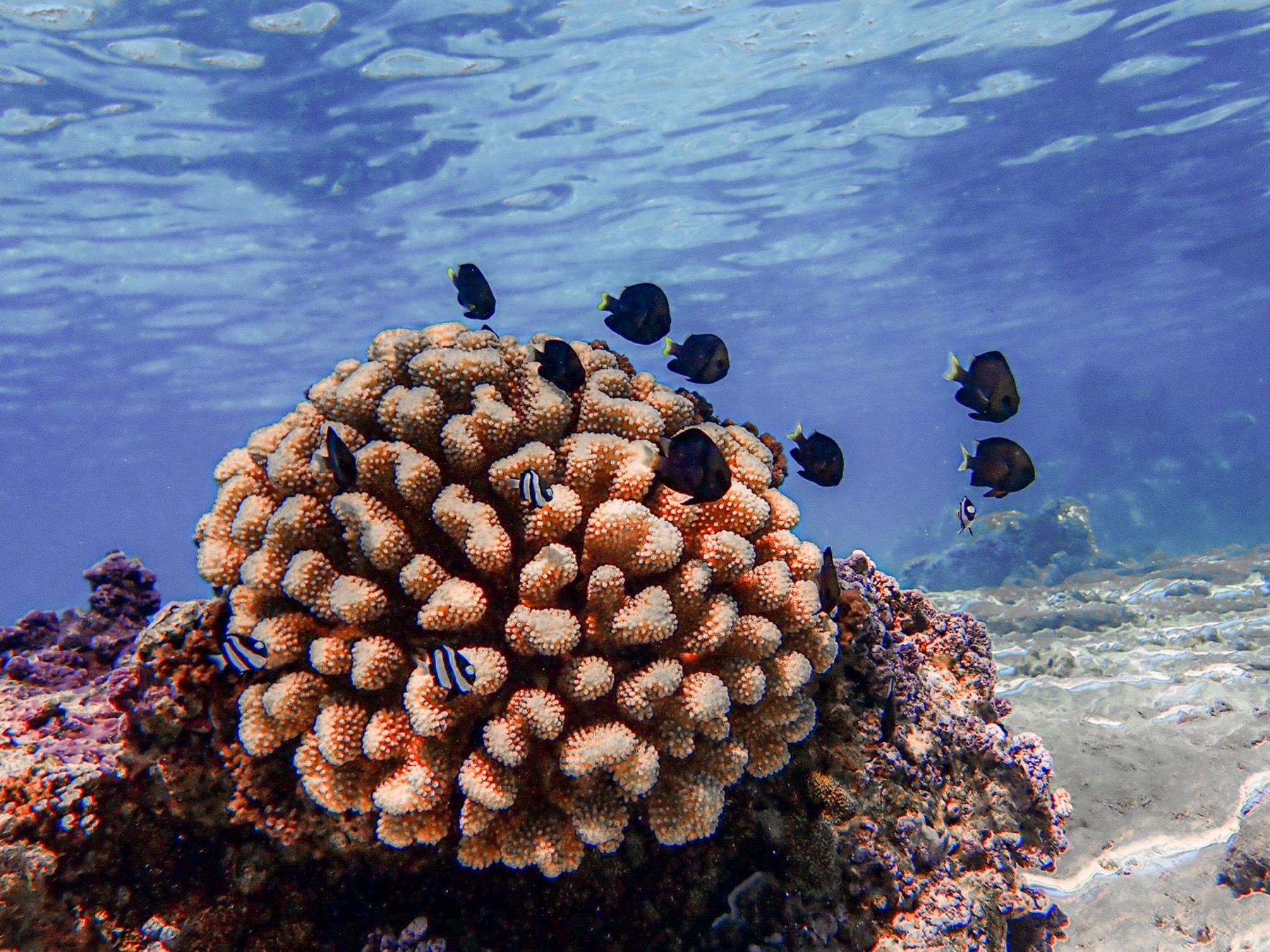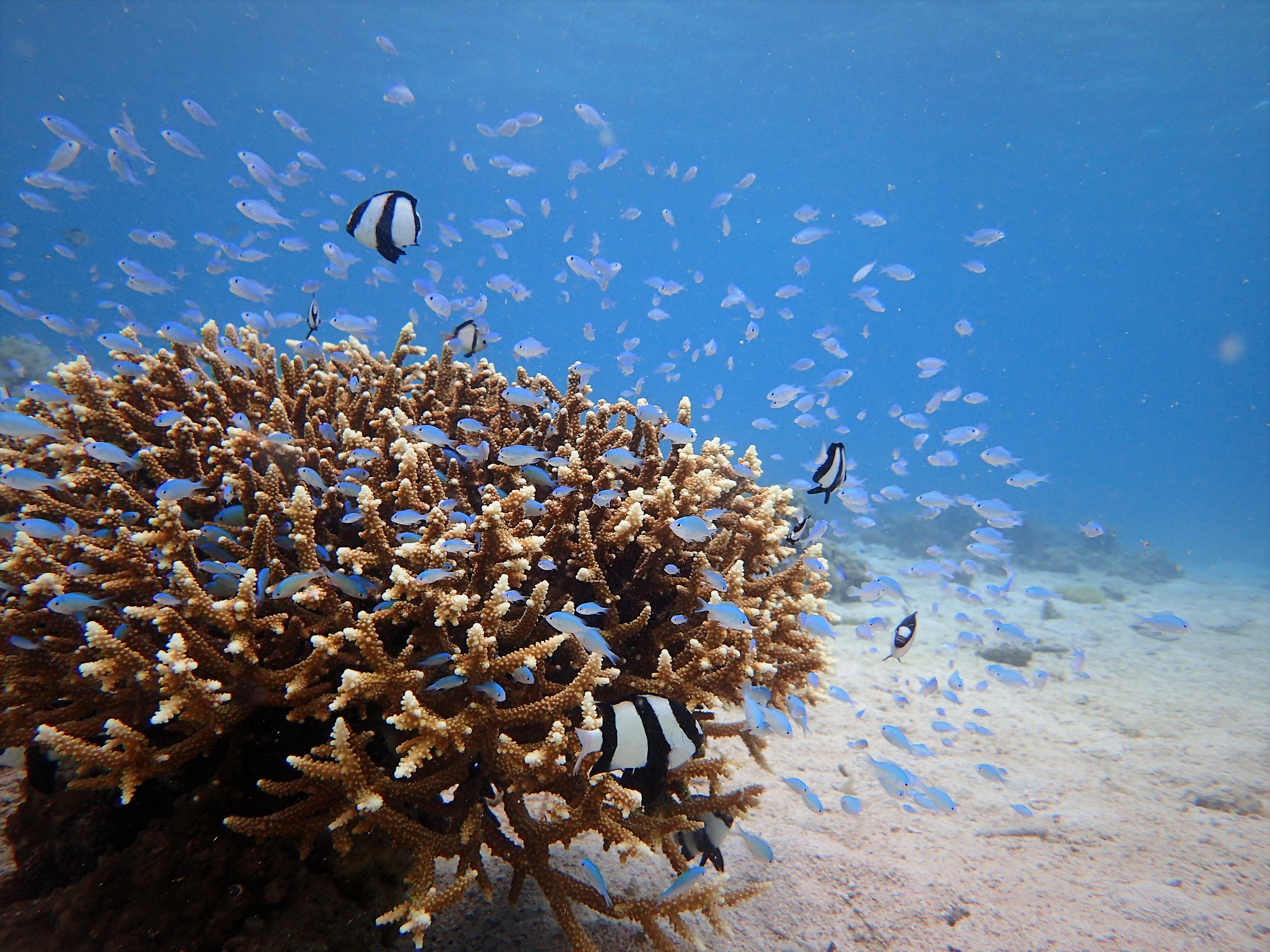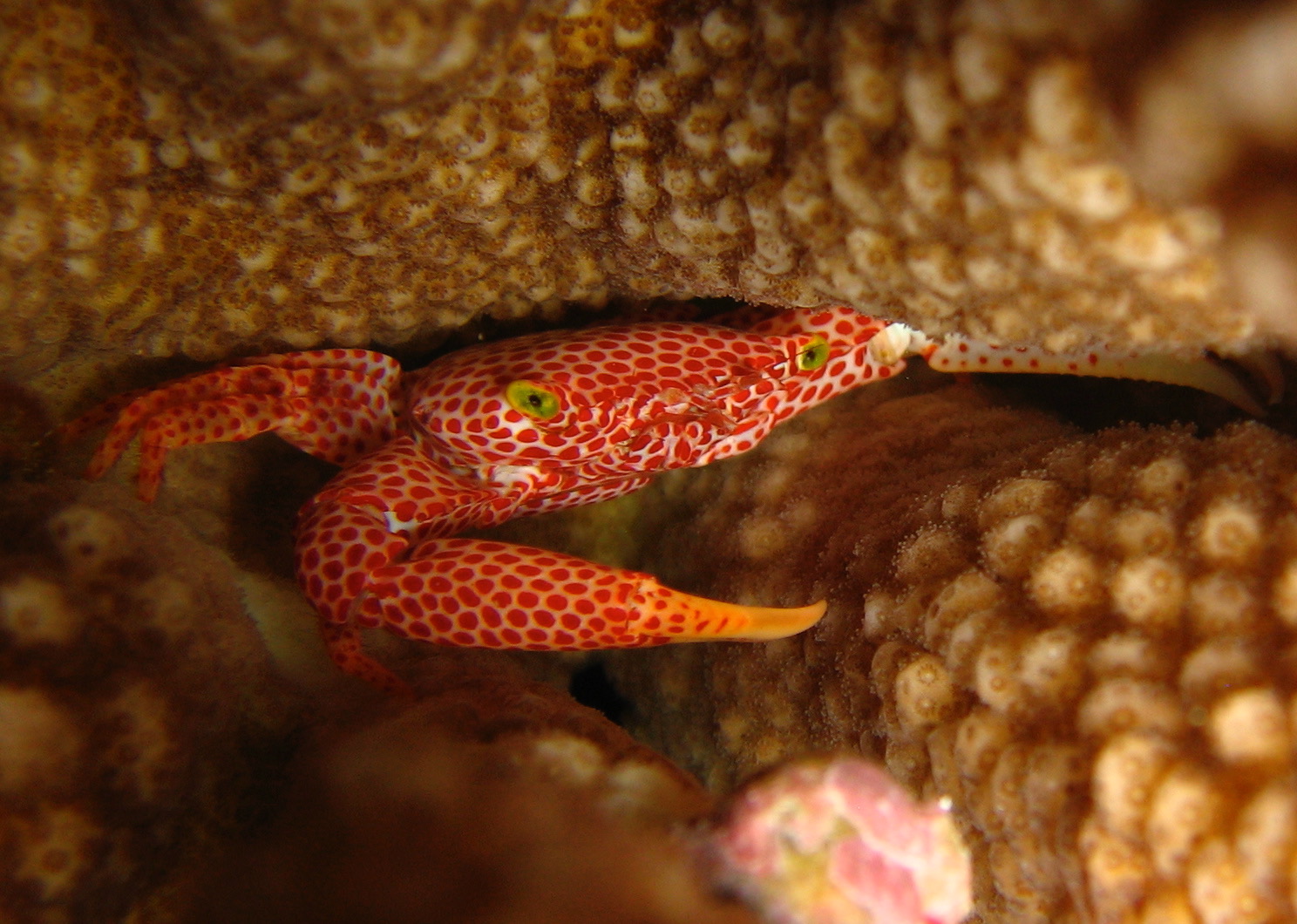
The paper describes coral guard crabs in the family Trapeziidae, small crustaceans that live symbiotically within branching corals in the tropical Pacific Ocean, protecting their hosts from predators and sediment while being completely dependent on the coral for survival. The review synthesizes existing research on Trapeziid crab-coral mutualisms, examining their defensive behaviors, ecological impacts, and responses to climate change through various field studies and experiments. Trapeziid crabs attack predators much larger than themselves, including crown-of-thorns sea stars and pincushion stars, using their claws to shove and pinch the predators' tube feet. The crabs act as housekeepers, removing sediment from coral surfaces, which is important for coral survival in high-sedimentation areas. Climate change experiments showed increased water temperature caused reductions in crab abundance and egg production, and caused crabs to expel their mates. The crabs create 'halos' of protection around coral colonies, indirectly protecting nearby corals and other reef organisms. These small crabs play an important role in coral reef resilience by protecting corals from predators and sediment damage. As climate change threatens coral reefs, understanding these protective relationships becomes important for conservation efforts, especially since warming waters reduce crab abundance and defensive behavior.
Citation
Stier, Adrian C.; Osenberg, Craig W. (2024). Coral guard crabs. Current Biology.
"The crabs act as housekeepers, removing sediment from coral surfaces, which is important for coral survival in high-sedimentation areas."
Cite this article
Stier et al. (2024). Coral Guard Crabs Defend Branching Corals From Starfish and Sediment. Ocean Recoveries Lab. https://doi.org/10.1016/j.cub.2023.10.067