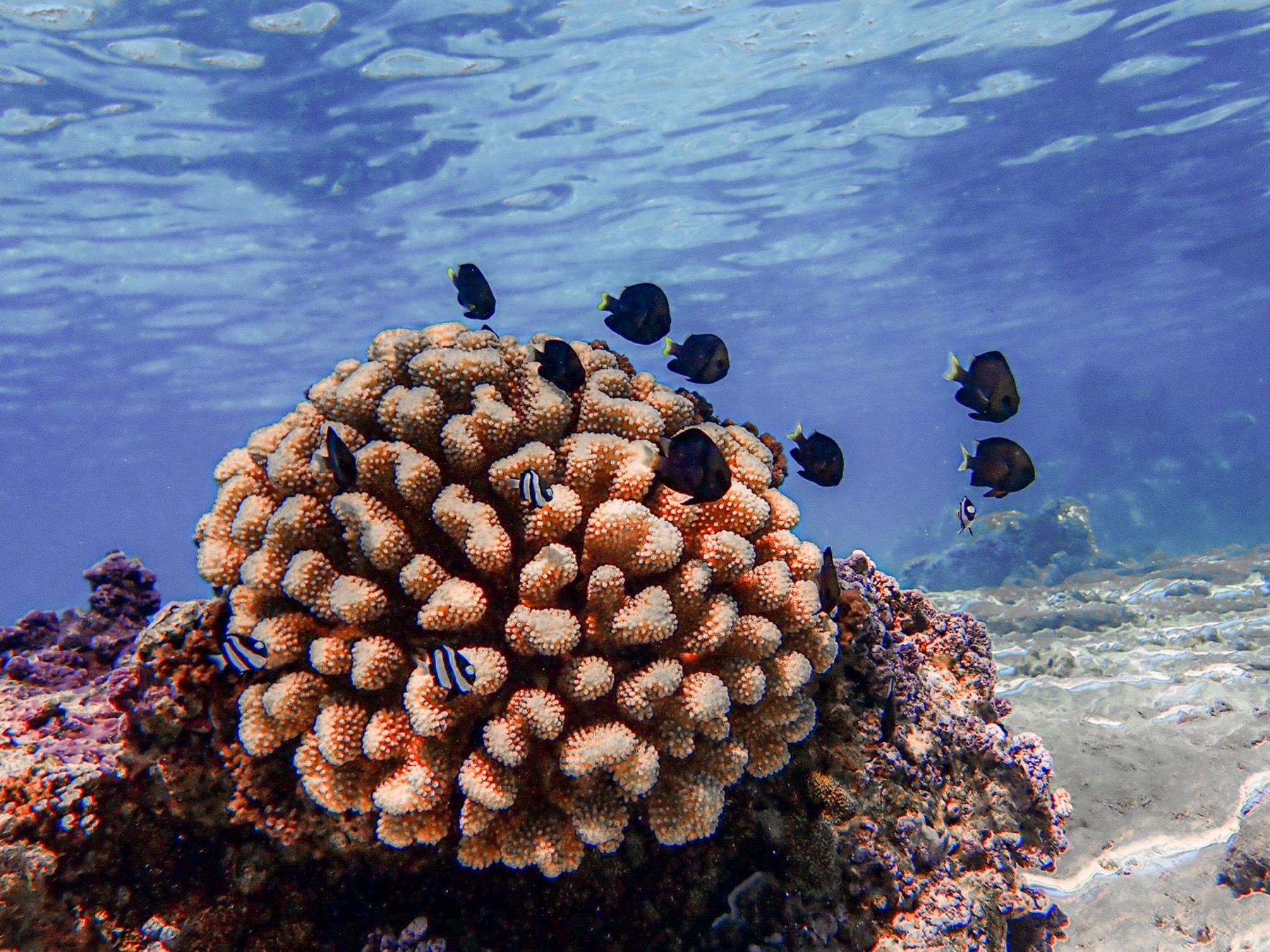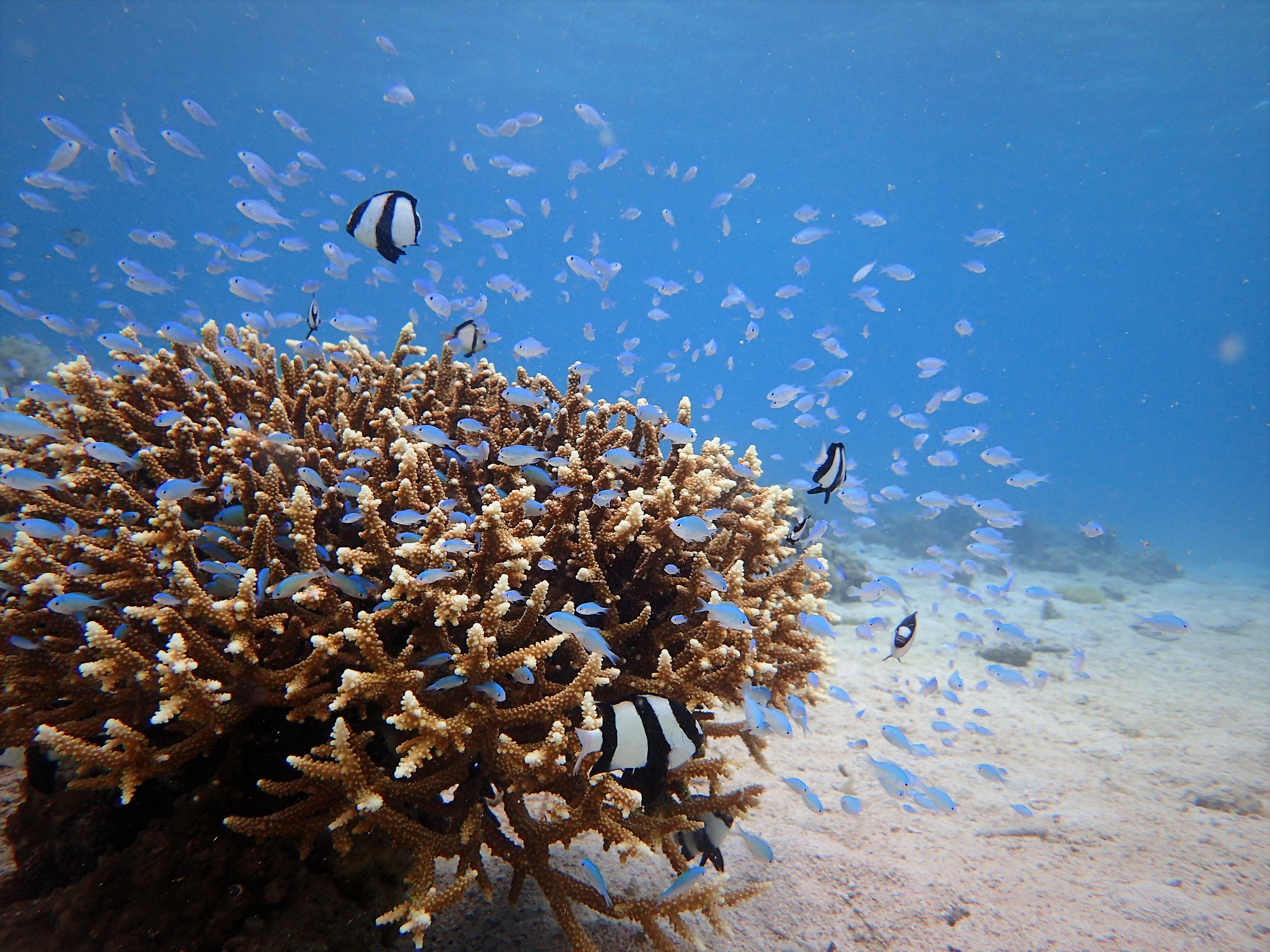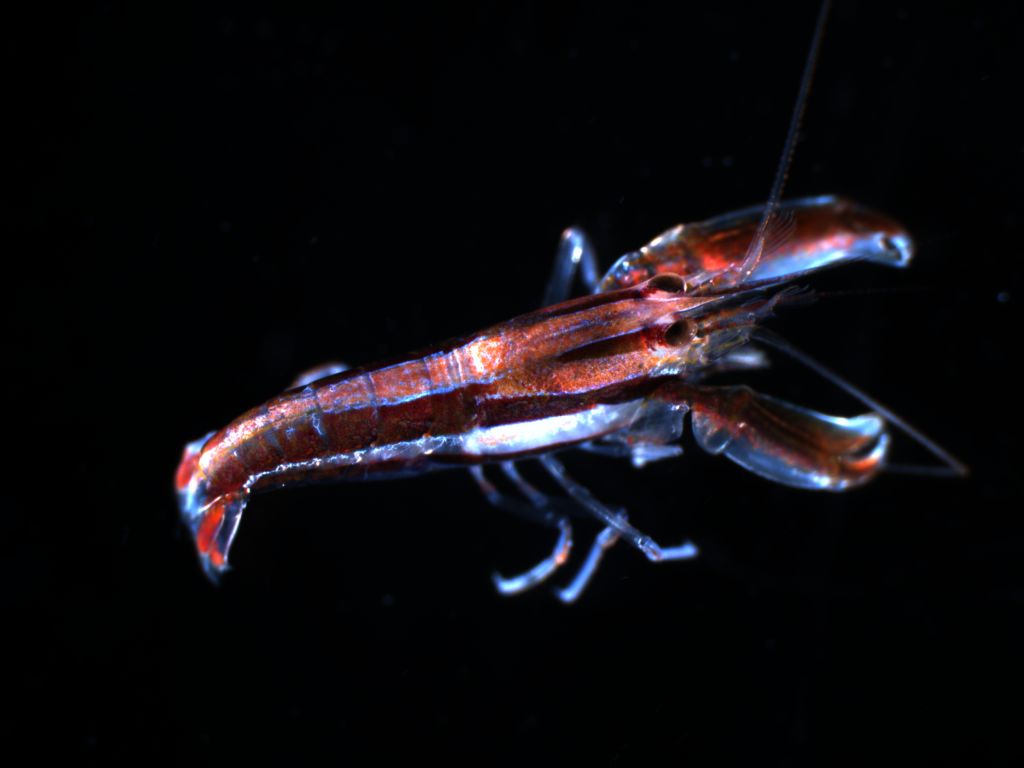
We investigated whether multiple species of mutualistic investigated whether multiple species of mutualist crustaceans that live on coral reefs provide independent benefits to their coral hosts, or whether their combined effects create something greater than the sum of their parts. Most mutualism research focuses on simple pairwise relationships, but coral reefs are complex communities where multiple defender species often coexist on single coral colonies.
We collected Pocillopora coral colonies from shallow waters near Moorea and carefully manipulated which crustaceans were present before exposing them to Culcita sea stars in controlled feeding trials. Our results revealed a clear pattern of synergistic defense.
When either species defended alone, they provided modest protection—the presence of mutualists reduced predation frequency by 15% and the volume of coral tissue consumed by 45%. But when both species were present together, they reduced coral tissue loss by a dramatic 73%. This wasn't just additive—if the two species had worked independently, researchers would have expected only a 38% reduction in tissue loss based on their individual performances. The 73% reduction was significantly greater, revealing what We termed an emergent 'multiple defender effect.'
The research showed that the frequency of attacks didn't differ significantly from what would be expected if the defenders worked independently, but somehow their combined presence dramatically reduced the amount of coral tissue actually consumed when attacks did occur.
This discovery has profound implications for coral reef conservation. If the defensive benefits of mutualist communities emerge from synergistic interactions rather than simple addition of individual effects, then protecting coral reefs means protecting entire networks of mutualist species. Losing even one partner in these multi-species mutualisms could cause disproportionate declines in coral defense, especially as coral reefs face increasing pressure from climate change, overfishing, and other human impacts.
The work opens up new questions about how complex mutualist communities function. We noted that in initial studies conducted in 2006, they observed up to five species of Trapezia along with Alpheus lottini occupying single Pocillopora coral colonies. Understanding these multi-species partnerships may be key to predicting which coral communities will persist in our changing oceans.
Citation
McKeon, C. Seabird; Stier, Adrian C.; McIlroy, Shelby E.; Bolker, Benjamin M. (2012). Multiple defender effects: synergistic coral defense by mutualist crustaceans. Oecologia.
Cite this article
McKeon et al. (2012). Tiny Coral Bodyguards Team Up for Super-Powered Defense Against Starfish Attacks. Ocean Recoveries Lab. https://doi.org/10.1007/s00442-012-2275-2