We wanted to understand how fish populations naturally fluctuate on coral reefs—specifically, what controls how many young fish survive their first vulnerable weeks after settling onto the reef.
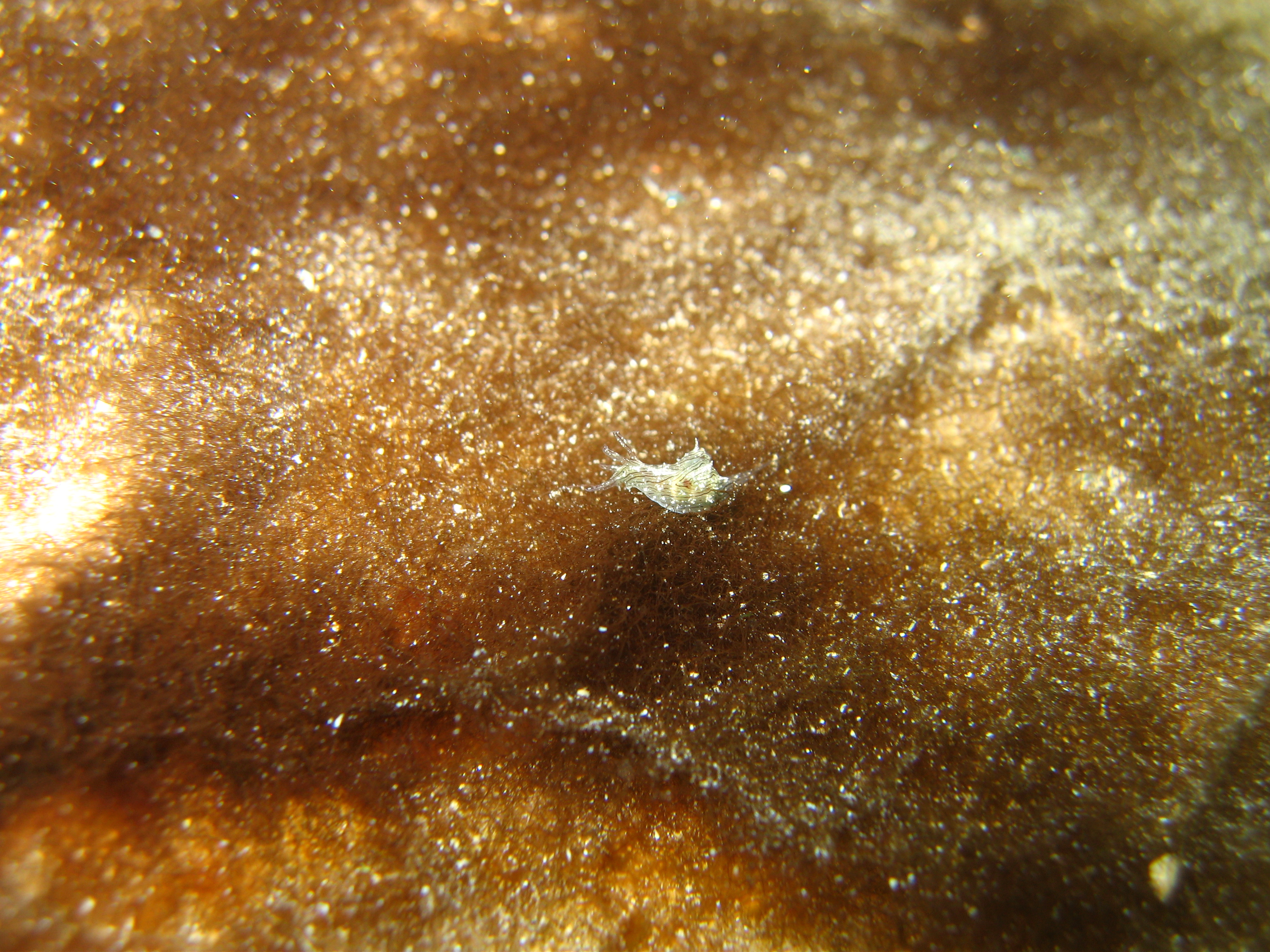
Geange and Stier tested whether predation might be disrupting the natural control of cyanobacterial blooms on coral reefs. They collected nudibranchs, sea hares, and mats of the toxic cyanobacterium Lyngbya majuscula from the field and designed a series of feeding experiments using plastic containers placed in flow-through seawater tanks, testing how these three species interact in what appeared to be a simple food chain: nudibranch eats sea hare, sea hare eats cyanobacteria.
Our results revealed a stark size bias in predation. Small sea hares were consumed 22 times more often than large ones - a dramatic difference that suggests young sea hares face much higher mortality risk. When they tested the full three-species system, they found that nudibranch predation significantly reduced sea hare numbers. This predation pressure had a cascading effect: cyanobacterial biomass was 1.5 times greater when nudibranchs were present compared to when they were absent.
The nudibranch's feeding rate followed a classic Type II functional response, with an attack rate of 12.21 per day and a handling time of 0.285 days per sea hare. We observed that nudibranchs are suction feeders, consuming sea hares one individual at a time, while sea hares would attempt to evade predators by excreting purple ink and undulating their bodies.
These findings matter because cyanobacterial blooms are becoming more frequent and severe on coral reefs due to warming waters and nutrient pollution. The blooms smother corals, kill fish, and cause skin and respiratory irritation in humans. If predation pressure is reducing the effectiveness of natural grazers, it suggests that protecting herbivore populations could be crucial for managing these harmful blooms.
The research provides clear evidence of trophic cascade effects in laboratory conditions, but more work is needed to understand how these dynamics play out in complex reef ecosystems where many more species and environmental factors are involved.
Citation
Geange, S. W.; Stier, A. C. (2010). Charismatic microfauna alter cyanobacterial production through a trophic cascade. Coral Reefs.
Cite this article
Geange et al. (2010). Tiny Predators Make Toxic Algal Blooms Worse by Eating the Creatures That Fight Them. Ocean Recoveries Lab. https://doi.org/10.1007/s00338-010-0606-5